How Much Does It Cost to Put Tires on Rims? Putting tires on rims sounds simple. You hand over the tires, the shop mounts them, and you drive away. But the bill at the counter is almost never just the cost of the tires themselves — and if you walk in without knowing what to expect, the final number can surprise you.
Here is exactly what it costs to put tires on rims in 2026, what every charge on that invoice actually means, how much a new car rim cost,and where you can save money without cutting corners on safety.
What Does “Mounting” Actually Mean?
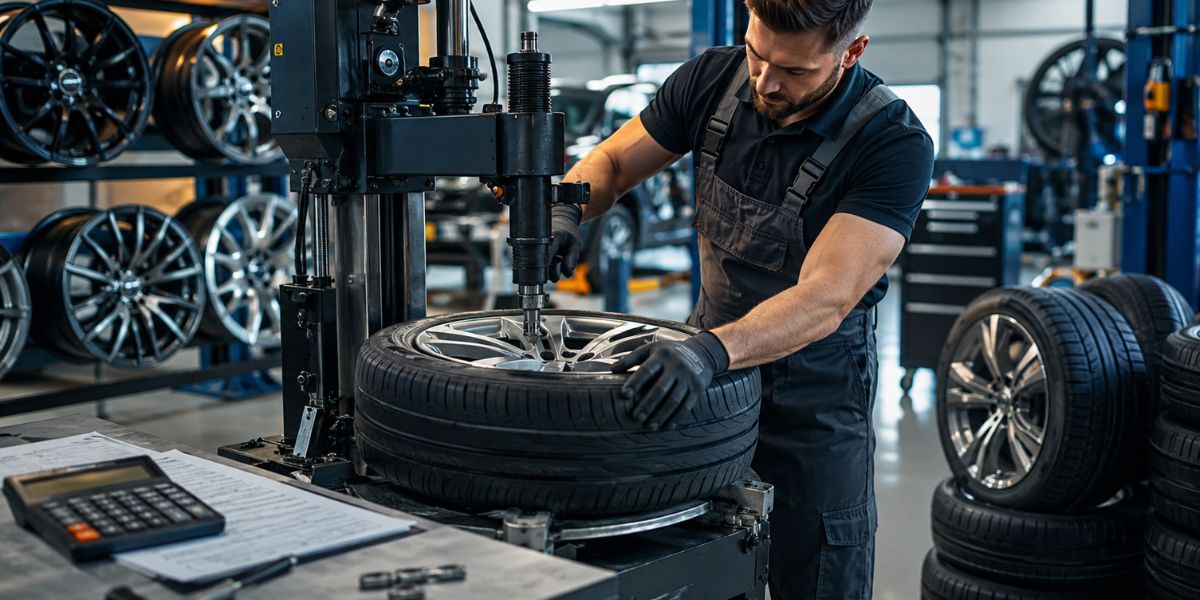
Cost of mounting tires on rims, Mounting is the process of seating a tire onto a rim. A machine stretches the tire bead over the rim edge and seats it correctly against the bead seat. It sounds straightforward — and for standard passengercar tires on standard rims, it usually is.
The cost of mounting one tire at a shop typically runs $10 to $30 per tire for standard passenger vehicles. That number climbs for larger tires, low-profile performance tires, run-flat tires, and oversized truck or SUV tires that require more labor and care to mount without damaging the rim.
Performance and low-profile tires: $20 to $45 per tire
Truck and SUV tires (17–20 inch): $15 to $30 per tire
Oversized and off-road tires (35 inch and above): $25 to $50 per tire
Run-flat tires: $25 to $50 per tire — stiff sidewalls require extra equipment and care
Motorcycle tires: $20 to $40 per tire, depending on size
Balancing — The Cost That Always Gets Added
Mounting and balancing are almost How Much to Install Rims and Tires always sold together, and balancing is not optional if you want the wheels to perform correctly.
Wheel balancing corrects for small weight variations in the tire and rim combination. Without it, the wheel assembly vibrates at speed — you feel it in the steering wheel, the seat,cost to change tires on rims, and the floorboard. Unbalanced tires also wear unevenly, shortening their life significantly.
Balancing one wheel typically costs $10 to $20 per wheel at most shops. Combined with mounting, the standard bundle runs $20 to $45 per tire/wheel combination for passenger vehicles. Some shops offer flat-rate mounting and balancing packages per set of four — typically $60 to $150 for a full set on standard passenger vehicles.
How Much Does It Cost to Put Tires on Rims
Valve Stems — The Small Cost Most People Forget
Valve stems are the small rubber or metal valves on the rim that you use to inflate the tire. Rubber valve stems degrade over time and are typically replaced when new tires are mounted. Metal valve stems last longer but cost more.
Standard rubber valve stems: $3 to $5 each
Metal bolt-in valve stems: $5 to $15 each
TPMS (Tire Pressure Monitoring System) valve stems: $15 to $75 each
That last one catches a lot of buyers off guard. If your vehicle has a TPMS system — which is required on all vehicles sold in the US after 2007 — those sensors sit inside the wheel attached to the valve stem. When tires are dismounted and remounted, how much does a tire rim cost ,shops often recommend replacing the TPMS service kit (valve core, cap, nut, and seal) even if the sensor itself is fine. That service kit runs $5 to $15 per wheel. Full TPMS sensor replacement costs $50 to $150 per sensor if the sensor itself has failed.
Tire Disposal Fees — The Charge You Did Not Budget For
If you are replacing old tires and the shop is dismounting them, most shops charge a disposal fee for the old rubber.
Standard tire disposal fees run $2 to $5 per tire at most shops. Some shops charge up to $10 per tire in areas with stricter environmental disposal requirements. It is a small charge — but it adds up across a set of four and is worth knowing about before you get to the counter.
Total Cost — What You Actually Pay Per Tire and Per Set
Here is what the realistic all-in cost looks like when you account for mounting, balancing, valve stems, and disposal:
Per tire (standard passenger vehicle):
Mounting: $15 to $25
Balancing: $10 to $20
Valve stem: $3 to $5
Disposal (old tire): $2 to $5
Total per tire: $30 to $55
Full set of four (standard passenger vehicle):
Realistic all-in range: $120 to $220
Per tire (performance / low-profile):
Mounting: $25 to $45
Balancing: $15 to $25
Valve stem: $5 to $15
Disposal: $2 to $5
Total per tire: $47 to $90
Full set of four (performance vehicle):
Realistic all-in range: $190 to $360
Per tire (large truck / SUV — 20 inch and above):
Mounting: $20 to $40
Balancing: $15 to $25
Valve stem: $5 to $10
Disposal: $3 to $5
Total per tire: $43 to $80
Full set of four (large truck/SUV):
Realistic all-in range: $172 to $320
Where You Get Tires Mounted Affects the Price
Not all shops charge the same. Here is how major options compare.
Dedicated tire shops (Discount Tire, Tire Rack installer network, NTB): Typically, the most competitive pricing on mounting and balancing. Discount Tire charges $18 to $25 per tire for mounting and balancing combined on most standard vehicles. Many offer free lifetime rotation and rebalancing with purchase, which adds meaningful long-term value.
Dealership service departments: Generally, the most expensive option for mounting and balancing. Expect $30 to $50 per tire for the same job a tire shop does for $20. The convenience of having it done at the dealer is real — but you pay for it.
Big-box retailers (Costco, Walmart Auto): Costco charges approximately $18 to $20 per tire for installation, how much does a new tire and rim cost,which includes mounting, balancing, valve stems, how much to put a tire on a rim, rotation, and flat repair for the life of the tire. This is exceptional value — but you must purchase the tires from Costco to access those services. Walmart Auto Center runs similarly competitive pricing.
Independent mechanics: Variable pricing — can be very competitive or surprisingly expensive depending on the shop. Worth calling ahead for a quote. Many independent shops are competitive with tire chain pricing and offer faster turnaround.
Yes — usually. Most shops charge slightly more to mount tires you supply yourself (bought online, for example) than tires purchased through the shop. This is called a “bring your own tire” or BYOT fee.
The reason is simple: when you buy tires from the shop, their margin on the tire sale offsets some of the labor cost. When you supply the tires yourself, that offset disappears. Shops recapture it through higher mounting fees.
BYOT mounting fees typically run $15 to $50 per tire, depending on the shop and tire type — sometimes slightly higher than the standard mounting rate for shop-purchased tires. Tire Rack’s installer network, for example, ships tires directly to a local installer at a pre-negotiated mounting rate that is often competitive with or better than buying locally.
If you are buying tires online for the price savings, factor the BYOT mounting cost into your total before assuming online is cheaper. Sometimes it is — sometimes the difference is smaller than it appears once mounting is added.
Factors That Make Mounting Cost More
Not all mounting jobs are the same. These factors push the price upward.
Low-profile tires. A tire with a very short sidewall — common on performance cars and luxury vehicles — is significantly harder to mount without damaging the rim. The risk of scratching alloy wheels during mounting is higher, and shops with the right equipment and experience charge accordingly.
Beadlock wheels. Specialty off-road wheels that use a mechanical ring to hold the tire bead in place require significantly more labor to mount. Expect to pay $50 to $100 per tire or more for beadlock mounting.
Large diameter tires. Tires above 35 inches — common on lifted trucks — require more equipment capacity and labor. Some shops charge a premium simply because fewer machines in the shop can handle the size.
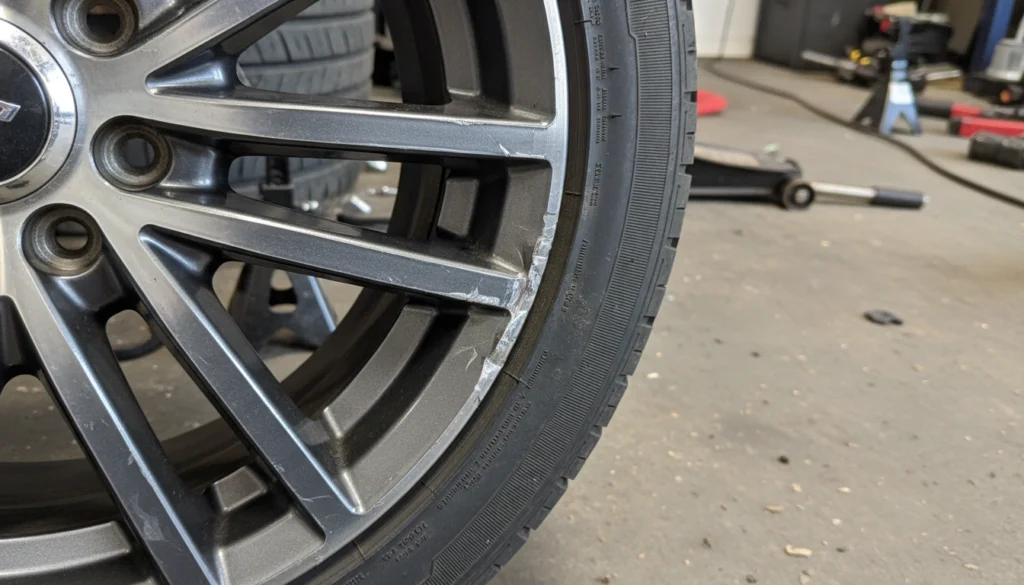
Corroded or damaged rims. A rim with significant corrosion on the bead seat area takes more time to prepare and seal correctly. Shops may charge additional labor or add a bead sealer product cost to the invoice.
How Much Does It Cost to Put Tires on Rims
How much does it cost to mount and balance four tires?
For a standard passenger vehicle, expect to pay $120 to $220 all-in for mounting, balancing, new valve stems, and disposal of old tires. Performance vehicles and larger trucks run $190 to $360 for a full set.
Can I just mount tires without balancing? Technically, yes — but it is not recommended. An unbalanced tire causes steering wheel vibration, uneven tread wear, and accelerated suspension component wear. The $10 to $20 per wheel cost of balancing is worth it every time.
How long does it take to mount and balance four tires?
At a busy shop, how much does rim to rim cost,one hour to one and a half hours is typical for a full set of four. At a dedicated tire shop with proper staffing, 45 minutes is possible.
How Much Does It Cost to Put Tires on Rims can vary depending on the shop, tire size, and vehicle type. Dealership service departments can run two to three hours, depending on their schedule when handling How Much Does It Cost to Put Tires on Rims services.
Is it worth buying tires online to save money?
Often yes — particularly for common tire sizes where online pricing is significantly below local retail. When calculating How Much Does It Cost to Put Tires on Rims, factor in the BYOT mounting fee ($15 to $50 per tire, depending on the shop) before estimating total savings.
For less common sizes, local pricing is sometimes competitive with online once mounting is factored in, which can affect How Much Does It Cost to Put Tires on Rims in your area.
Do I need new valve stems every time I mount new tires?
Standard rubber valve stems are inexpensive and degrade over time. Most shops recommend replacing them whenever tires are mounted. This small expense should be considered when estimating How Much Does It Cost to Put Tires on Rims.
TPMS sensors require a service kit replacement at a minimum — full sensor replacement if the sensor has failed, which can further increase How Much Does It Cost to Put Tires on Rims.
how much to put tires on rims?
Cost to Mount Tires on Rims
Service Type
Cost Per Tire
4 Tires Total
Mounting only
$5 – $15
$20 – $60
Balancing only
$8 – $15
$32 – $60
Mounting + Balancing
$13 – $45
$52 – $180
Mobile tire service
$25 – $50
$100 – $200
Can I mount tires on rims myself?
Technically possible with the right tools — a tire mounting bar, bead breaker, and bead sealer at a minimum. However, most DIY attempts result in damaged rims or improperly seated beads. The professional mounting fee is often worth paying when considering How Much Does It Cost to Put Tires on Rims.
Does rim material affect mounting cost?
Yes. Standard steel rims are the easiest and cheapest to mount on. Alloy wheels require more care to avoid scratching, while forged or aftermarket wheels may cost more. Carbon fiber wheels require specialized equipment and experienced technicians, which directly impacts How Much Does It Cost to Put Tires on Rims.
how much to replace a rim.Putting tires on rims costs $30 to $90 per tire all-in for the majority of passenger vehicles and trucks when you include mounting, balancing, valve stems, and disposal. A full set of four runs $120 to $360 depending on tire size, vehicle type,how much does a new car rim cost, and which shop you choose.
The variables that move the needle most are tire type (standard vs. performance vs. oversized), where you get the work done (tire chain vs. dealership vs. big-box retailer),cost to put tires on rims and balance, and whether you supply your own tires or buy through the shop.
Know those numbers before you walk in. The invoice at the counter will make a lot more sense — and you will be in a much stronger position to ask the right questions.