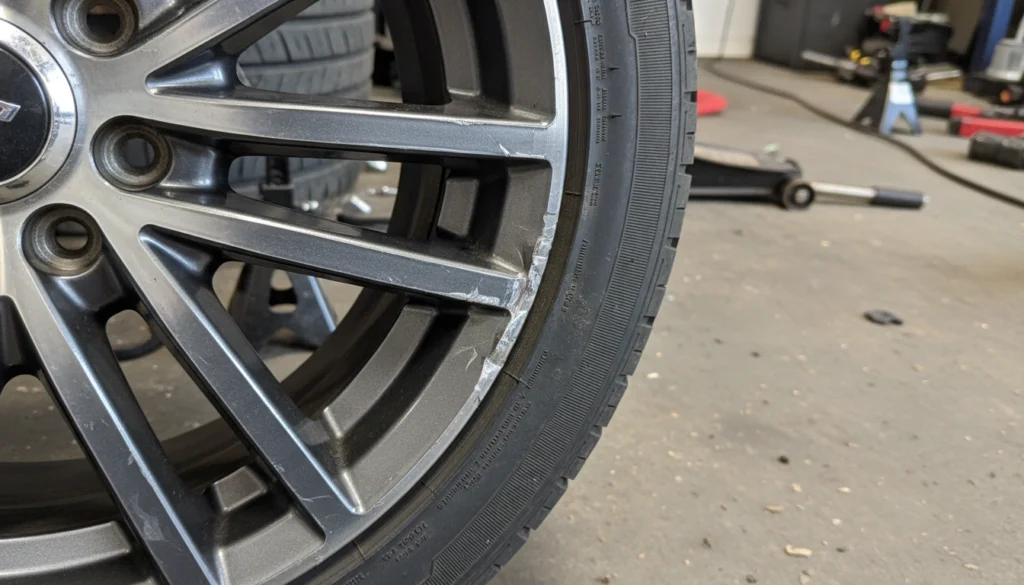
how much does a new rim cost. Anyone who’s ever curbed a wheel at a tight parking garage entrance knows the sinking feeling that follows: that grinding scrape, then the slow realization that “I’ll just touch it up” isn’t going to cut it this time. The next thought is almost always the same. How much is this actually going to cost me?
The honest answer is: it depends, but not in a vague, shrug-your-shoulders way. Rim prices follow patterns based on size, material, and where you buy them, and once you know those patterns, you can predict your own cost within a fairly tight range. This guide walks through real pricing data, the hidden fees nobody mentions until the invoice, and a few practical ways to keep more money in your pocket.
The Quick Answer
A single new rim typically costs somewhere between $75 and $800, with most everyday drivers landing in the $150–$350 per wheel range for a quality aluminum alloy wheel. A full set of four runs roughly $600 to $1,600 for mid-range options, while basic steel wheels can be found for as little as $50–$150 each. High-end forged, chrome, or carbon fiber wheels push well past $1,000 per wheel and can climb into the thousands for custom or low-volume designs.
That’s the headline number. The rest of this article breaks down exactly why your price might land at the low end, the high end, or somewhere in between — plus the extra costs that tend to sneak up on people after they’ve already budgeted for “just the rim.”
What Actually Drives the Price of a Rim
Four factors do almost all the work in determining what you’ll pay: material, size, brand, and finish. Get a feel for these and you can roughly price out a wheel before you even open a shopping tab.
Material
This is the single biggest price lever.
- Steel wheels are the budget workhorses of the wheel world. They’re heavy, simple to manufacture, and tend to run $50 to $150 new, with used steel wheels sometimes available for $20–$50 at salvage yards. They’re common on base-trim vehicles and as a temporary fix.
- Cast aluminum alloy wheels are what most cars on the road actually wear. They’re lighter than steel, handle heat better, and look noticeably better. Expect $100 to $400 per wheel depending on size and design complexity.
- Forged aluminum wheels go through a different manufacturing process that compresses the metal’s grain structure, making them stronger and lighter per pound than cast alloys. That extra strength and the more involved manufacturing process pushes prices to $400–$1,500+ per wheel.
- Carbon fiber wheels sit at the top of the price ladder, often starting around $2,000 per wheel and climbing into the multiple thousands. They’re extremely light and stiff, but a crack in the material generally means the whole wheel needs replacing — there’s no welding a carbon fiber wheel back together.
Size
Bigger wheels need more raw material and more precise machining, so price climbs steadily as diameter increases. As a rough guide:
| Wheel Diameter | Typical Price Per Wheel (Alloy) |
|---|---|
| 15″–16″ | $80–$180 |
| 17″–18″ | $150–$350 |
| 19″–20″ | $250–$600 |
| 21″–22″+ | $400–$1,200+ |
Width matters too — a wider wheel for a performance or off-road build costs more than a narrow economy-car wheel of the same diameter.
Brand and Finish
A no-name aftermarket wheel and a wheel from an established performance brand can differ in price by hundreds of dollars even at identical dimensions, largely because of brand reputation, design R&D, and warranty support. Finish adds its own premium on top of that: a basic clear-coat or painted finish is the cheapest option, a powder-coat finish costs about the same or slightly more, and chrome plating typically costs roughly double what a painted wheel of the same size would run, because the plating process is labor-intensive and uses more expensive materials.
New vs. Used vs. Reconditioned Rims
Not every situation calls for a brand-new wheel, and that’s worth knowing before you assume the worst.
New rims give you a clean slate, full structural integrity, and usually a warranty, but you’re paying full retail.
Used rims sourced from salvage yards or online marketplaces can save 40–70% off retail, and for an older car or a daily driver where looks matter less than function, this is often the smartest move. The catch is that you’re trusting someone else’s assessment of the wheel’s condition — hairline cracks aren’t always visible to the naked eye, so buying from a reputable seller who inspects and discloses damage matters more than chasing the absolute lowest price.
Reconditioned or refinished wheels split the difference. A shop takes a used wheel, repairs cosmetic damage, and refinishes the surface, generally for $50–$500 depending on how much work it needs. This only works for wheels with paint, finish damage. Anything with a structural crack should be replaced outright rather than repaired — a cracked wheel is not a safe candidate for cosmetic refinishing.
OEM vs. Aftermarket
OEM (Original Equipment Manufacturer) wheels are built to the exact specifications your car came with and have gone through the manufacturer’s safety testing, which is part of why they tend to cost more — OEM replacement wheels commonly run from around $75 on the low end for common compact-car sizes up to $800 or more for specialty, large, or luxury-vehicle wheels.
Aftermarket wheels are made by independent wheel manufacturers rather than your car’s maker. They’re not held to the same factory certification process, which is exactly why they can be priced lower, but it also means quality varies more between brands. A well-reviewed aftermarket wheel from an established maker can match OEM quality for less money; an unknown brand bought purely on price can be a gamble. Reading fitment specs carefully — bolt pattern, offset, and hub bore — matters more with aftermarket wheels, since a mismatch here can cause vibration or rubbing issues even if the wheel “looks” like the right size.
The Costs Nobody Mentions Upfront
The price tag on the wheel itself is rarely the whole story. Budgeting for these extras will save you from an unpleasant surprise at checkout.
- Mounting and balancing: Getting a tire seated onto a new rim and spun-balanced typically runs $15 to $45 per wheel, or roughly $60–$180 for a full set of four. Larger wheels, low-profile tires, and run-flat tires tend to push toward the higher end of that range.
- TPMS service: Most vehicles built after 2008 have tire pressure monitoring sensors, and reinstalling or reprogramming them during a wheel swap commonly adds another $5–$30 per wheel.
- Valve stems and shop supplies: Usually a small line item, but worth asking about upfront — some shops bundle this into their quoted price and some tack it on afterward.
- Shipping: Wheels are heavy and oddly shaped, so freight costs for online orders can range from free (built into the price) to $50–$100+ for a set, depending on the retailer and your location.
- Alignment: Not always necessary, but if your new wheels change your offset or you’ve had any suspension work alongside the wheel swap, a wheel alignment ($75–$200) is worth factoring in.
Add it up, and a “$1,000 set of wheels” conversation can realistically mean $1,100–$1,300 out the door once mounting, balancing, and TPMS service are included. That’s not a hidden gotcha — it’s just the full picture, and knowing it upfront means no surprises later.
Repair or Replace?
If a curb strike or pothole has left you with cosmetic scuffing only, refinishing is usually the cheaper and entirely safe option, generally landing between $50 and $400 per wheel depending on severity. If the rim has a noticeable bend, professional straightening runs about $75–$200 for a cosmetic-grade fix or $150–$400 if structural work and refinishing are both needed. But any wheel with an actual crack — not a scuff, an actual fracture in the metal — should be replaced rather than repaired. A cracked wheel has compromised structural integrity, and no amount of welding restores that to a level that’s safe at highway speeds.
A Real-World Example
To make these numbers concrete: a set of four 17×7.5″ aluminum alloy wheels with a dual 5×100/5×114.3 bolt pattern — the kind that fit a wide range of Japanese and import models including several Mitsubishi platforms — typically lists for around $1,000 for the complete set, which works out to roughly $250 per wheel. That price point sits squarely in the mid-range alloy bracket described above, and it illustrates how multi-fit aftermarket wheels can offer solid value compared to buying single OEM replacements one at a time.
This is exactly the kind of option Mitsubishi Autostore specializes in for Mitsubishi owners — sets of performance and replacement rims sized for models like the Lancer, Lancer Evolution, Eclipse, Galant, and Outlander, alongside the other body and mechanical parts those vehicles tend to need over their lifespan. If you’re shopping specifically for a Mitsubishi and want wheels that are already vetted for common bolt patterns on those platforms, browsing a specialist’s rim selection can save the back-and-forth of cross-checking generic listings for fitment.
How to Spend Less Without Cutting Corners on Safety
A few practical habits make a real difference in what you end up paying:
- Buy a full set, not one wheel at a time. Per-wheel pricing almost always improves when you buy four at once, and it avoids the cosmetic mismatch of one new wheel next to three weathered ones.
- Consider a slightly smaller wheel diameter if your car’s trim allows it. Dropping from a 20″ to an 18″ wheel, for instance, can meaningfully reduce cost without changing how the car drives day to day.
- Check fitment twice before ordering. Bolt pattern, offset, and hub bore mismatches are the most common (and most expensive) mistakes in aftermarket wheel shopping — a wheel that’s technically the “right size” but wrong offset can rub on the suspension or stick out past the fender.
- Ask whether mounting and balancing are included in an online retailer’s price before comparing it to a local shop’s all-in quote — the headline number isn’t always apples to apples.
- Don’t assume new is always necessary. A reputable seller of used or reconditioned wheels, especially for an older or high-mileage vehicle, can meet the same safety standard for considerably less money.
Is it cheaper to buy rims with tires already mounted?
Often, yes, when you buy a full set. Retailers that sell wheel-and-tire packages frequently bundle in mounting and balancing, and buying both together can beat paying separately for wheels, tires, and labor at three different counters.
Do I need to replace all four rims if only one is damaged?
Not necessarily. A single damaged wheel can usually be replaced or repaired on its own. Matching all four wheels is mostly a cosmetic preference — performance and safety only require the replaced wheel to match the others in size, offset, and load rating.
How much does it cost to paint or refinish a rim instead of replacing it?
Simple refinishing — sanding out scuffs and repainting or powder-coating — typically costs $50 to $500 depending on the wheel’s size and the extent of the damage, well below the cost of a full replacement for cosmetic issues only.
Are OEM rims always better than aftermarket?
Not always “better,” but generally more rigorously tested. A well-regarded aftermarket brand can match OEM performance and durability for less money, while an unverified low-cost aftermarket wheel can be a real gamble on quality. Checking reviews and certifications matters more than the OEM-versus-aftermarket label by itself.
What’s the most common mistake people make when buying new rims?
Underestimating the total cost. Mounting, balancing, TPMS service, and possibly an alignment can add $100–$300 on top of the wheel price itself, and people who only budget for the sticker price on the wheel are often caught off guard at checkout.
The Bottom Line
Rim pricing isn’t random — it follows a fairly predictable curve based on material, size, and brand, with steel at the budget end, forged and carbon fiber wheels at the premium end, and cast aluminum alloy covering the broad middle ground most drivers actually buy. Once you know roughly where your needs fall on that spectrum, and you’ve budgeted for mounting, balancing, and TPMS service on top of the wheel price, there shouldn’t be many surprises left. Whether you’re matching a factory look or shopping a multi-fit set for your specific platform, the right rim is mostly a matter of knowing your size, your budget, and your bolt pattern before you start clicking “add to cart.”