

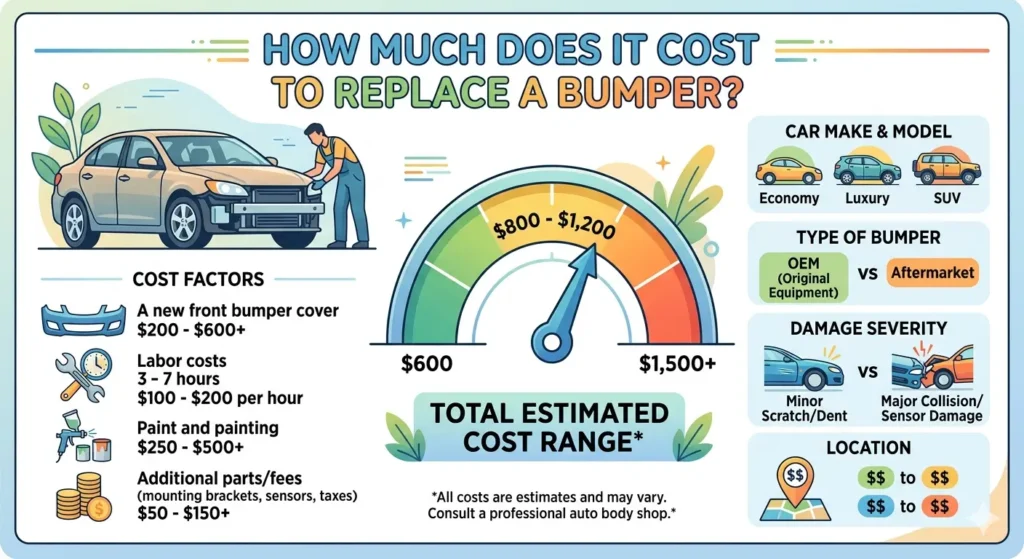
How Much Does It Cost to Replace a Bumper?
Replacing a car bumper typically costs between $500 and $2,000, with an average cost of roughly $1,000–$1,200 for parts and labor. Costs vary significantly based on vehicle make/model, whether you use OEM or aftermarket parts, and whether sensors require recalibration. Simple, non-painted covers can be under $500, while luxury cars with advanced sensors can exceed $3,000. If you’re wondering how much does it cost to replace a bumper, the answer depends on several factors. The cost varies based on the car’s make and model, the bumper material (plastic, fiberglass, steel, or aluminum), and whether you choose a new or aftermarket part. Labor and painting charges also affect the total. On average, replacing a bumper can cost anywhere from $500 to $2,000, while minor repairs or repainting may range from $500 to $1,200. Luxury or specialty cars can be significantly higher. DIY replacement is an option, but it can be risky. To save costs, consider insurance coverage, reputable repair shops, and comparing parts prices. Always ensure the bumper is properly installed for safety. Factors Affecting Bumper Replacement Cost A bumper fix can cost between $150 and $1,500, depending on what needs to be done. Small dents are cheaper, usually $150 to $500, while badly damaged bumpers need to be replaced for $400 to $700. Your car type matters a lot – fancy cars cost more because they need special parts and skilled workers. The shop’s location changes the price too, as workers charge between $50 and $150 per hour. Several key factors determine how much it costs to replace or repair a bumper. Understanding these can help car owners plan and budget effectively. i. Vehicle Type The make and model of your car significantly affect replacement costs. Luxury vehicles often require OEM (Original Equipment Manufacturer) parts, which are more expensive than aftermarket options used for standard or economy cars. Larger vehicles, like SUVs and trucks, may also have higher labor costs due to heavier and larger bumpers. ii. Material Used Bumper materials influence pricing. Plastic bumpers are lightweight and affordable, while fiberglass is easier to paint but more prone to cracking. Steel and aluminum bumpers are stronger and more durable, but they increase labor and handling costs due to their weight. iii. Extent of Damage Minor scratches or dents can often be repaired with minimal cost. Severe damage, such as deep cracks or full structural compromise, requires a complete replacement, increasing the overall expense. iv. Repair Location Labor rates vary by region. Workshops in urban areas typically charge more than those in smaller towns. Finding a reputable shop that balances cost and quality is important. v. Built-in Sensors and Cameras Modern bumpers often house parking sensors, collision detection, or cameras. Damage to these components adds to the cost since recalibration or replacement is required to maintain vehicle safety. You can pick between original car maker parts ($800-$1,500) or similar parts from other makers ($400-$750). Knowing these price factors helps you make smart choices about fixes and insurance claims. Several factors influence how much it costs to replace a bumper. First, the material of the bumper plays a major role. Plastic bumpers are lightweight and affordable, while fiberglass offers easier paintability but may crack easily. Steel and aluminum bumpers are stronger and more durable, but they usually increase labor costs due to their weight and handling complexity. Next, your car model and make can significantly impact pricing. Luxury cars often require OEM parts, which are more expensive than aftermarket options used for standard or economy models. Average Cost to Replace a Car Bumper The average cost to replace a car bumper varies depending on your vehicle type, labor, parts, and painting needs. For economy cars, parts usually range from $100–$300, labor can cost $100–$200, and painting adds $50–$150. The total cost typically falls between $250–$650. For mid-range cars, replacement parts cost $200–$500, labor ranges $150–$300, and painting may add $100–$250, bringing the total to $450–$1,050. For luxury cars, OEM parts are more expensive at $500–$1,500. Labor may cost $300–$700, and painting can add $200–$400. Total replacement costs can reach $1,000–$2,600. These price components help you plan your budget and compare quotes. If you’re curious about how much it will cost to fix a bumper or how much it costs to paint a bumper separately, these ranges provide a clear estimate for different car categories. Cost Breakdown for Bumper Replacement Replacing a bumper involves several steps, each contributing to the overall cost: Basic Replacement: A standard bumper for a small car can cost between $500 and $1,500. Luxury Vehicles: Replacing bumpers on premium models can range from $2,000 to $5,000. Insurance Impact: Your out-of-pocket cost depends on your deductible. Many insurers cover replacements if caused by an accident. DIY vs. Professional Replacement When it comes to bumper replacement, you can either attempt a DIY repair or hire a professional. DIY replacement can save money since you only pay for the parts, and it gives a sense of satisfaction from doing the job yourself. However, it comes with significant risks. Improper installation can affect bumper alignment, safety sensors, or even compromise your car’s structural integrity. Lack of proper tools and experience may also lead to scratches, cracks, or further damage. On the other hand, professional replacement ensures correct installation, proper alignment, and flawless painting. Workshops also handle sensor calibration and structural safety. The downside is a higher cost, which includes parts, labor, and painting. Cost comparison: DIY can save $100–$500, but professional service typically provides better results and safety assurance. Considering both options, professional replacement is often worth the investment for long-term reliability. How to Reduce Bumper Replacement Costs Replacing a bumper can be expensive, but there are several strategies to lower the cost. One effective option is using aftermarket bumpers instead of OEM parts. Aftermarket options are usually cheaper while maintaining good quality and durability. Checking insurance Coverage: Is another key step. If the damage is from an accident or covered event, your insurance may cover part or all of the replacement cost, significantly reducing your out-of-pocket