 Proper rim measurement is essential for ensuring your vehicle performs safely and efficiently on the road. The correct rim size how to measure car rims directly affects how well your tires fit, how your car handles different driving conditions, and overall driving comfort. When rims are measured accurately, it helps maintain stability, improves braking performance, and supports even tire wear, which extends tire life and reduces maintenance costs.
Basic Tools You Need to Measure Car Rims
How to Measure for Rims
Measuring for rims correctly is one of the most important steps before making a purchase. From real-world automotive experience, getting accurate measurements ensures a safe fit, proper handling, and avoids costly return trips to the shop.
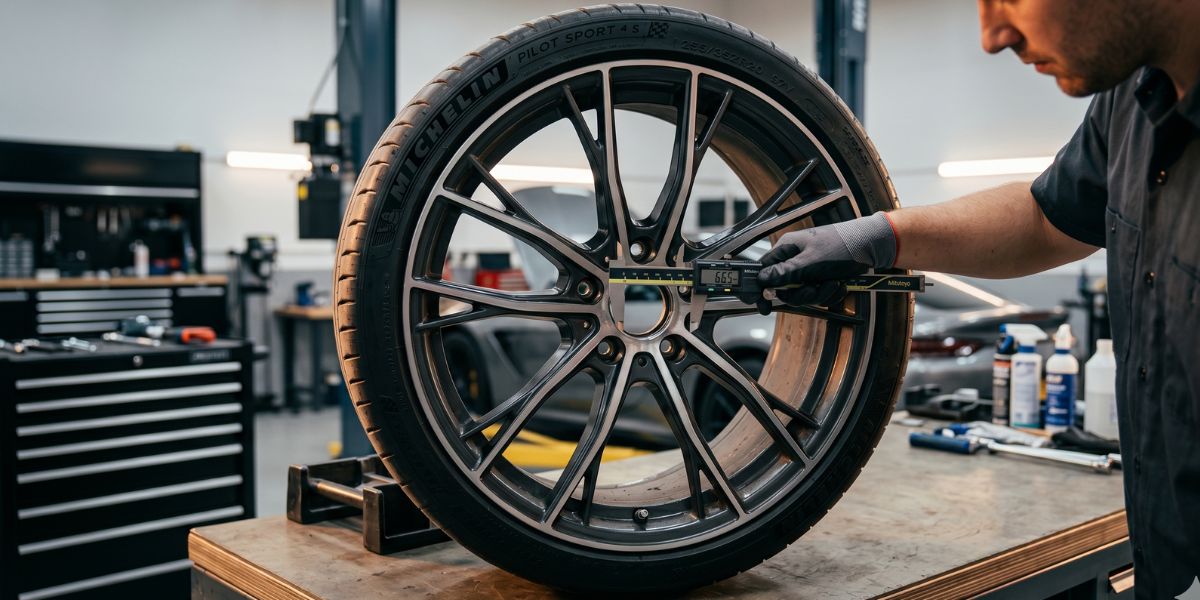
Step 1: Measure the Rim Diameter Using a tape measure, find the distance across the center of the rim from inner edge to inner edge. This gives you the diameter, commonly sized at 15″, 16″, 17″, or 18″. Always measure the inner mounting surface, not the outer decorative lip.
Step 2: Measure the Rim Width Measure from one inner bead seat to the opposite inner bead seat. This is the true width used to match the correct tire size.
Step 3: Check the Bolt Pattern Count the number of lug holes and measure the spacing between them. This is your bolt pattern, which must match your vehicle exactly for safe installation.
Step 4: Confirm the Offset Rim offset affects how the wheel sits inside the wheel well. Check your owner’s manual or door jamb sticker for the recommended offset measurement.
Step 5: Verify Before Buying Always double-check all measurements before purchasing. When unsure, consult a certified tire technician at a trusted auto shop for professional guidance.
Understanding Car Rim Basics
- Diameter: The distance across the rim from one edge to the other.
- Width: The internal space between the two inner edges of the rim.
- Bolt pattern: The arrangement and number of bolts used to attach the wheel to the car.
- Offset: The distance between the wheel’s mounting surface and its centerline, which affects how the wheel sits inside the wheel arch.
How to Measure Car Rim Diameter
Step-by-step process:
- Remove the wheel or ensure it is easily accessible.
- Identify the bead seat area, which is where the tire sits on the rim.
- Measure straight across the center of the rim from one bead seat to the opposite bead seat.
- Make sure the measuring tape is level and not angled for accurate results.
Measuring from bead seat to bead seat:
Common rim sizes (in inches):
Tips for accurate measurement:
- Always measure twice to confirm accuracy.
- Clean the rim surface before measuring for better visibility.
- Avoid estimating or rounding numbers.
- Use proper lighting if working in a garage or low-light area.
How to Measure Rim Width
How to Measure Bolt Pattern (PCD)
How to Measure Rim Offset
- Positive offset: The mounting surface is closer to the outer face of the wheel, pushing the rim inward.
- Negative offset: The mounting surface is closer to the inner edge, pushing the wheel outward.
- Zero offset: The mounting surface is perfectly aligned with the centerline of the wheel.
How to Check Rim Backspacing
Common Mistakes When Measuring Car Rims
How to Read Rim Size Markings on Tires
Tips for Choosing the Right Rim Size
Safety Considerations Before Installing New Rims
Safety should always be the top priority when installing new rims. First, ensure that the rims are fully compatible with your vehicle’s specifications, including bolt pattern, offset, and load rating.
The load rating is especially important because it determines how much weight the rim can safely support. Using rims with a lower load rating than required can be extremely dangerous. Similar attention to safety should be given when evaluating vehicle lighting repairs, including understanding the tail light replacement cost before replacing damaged components.
It is also highly recommended to have rims installed by a professional technician. Proper installation ensures correct torque settings, alignment, and balance, reducing the risk of accidents or premature wear. Professional installation is equally important when considering tail light bulb replacement cost, as incorrect installation can affect visibility and road safety.
Regular inspection after installation is also important to ensure everything remains secure and safe during driving. Whether you are upgrading wheels or budgeting for repairs, understanding tail light cost, maintenance expenses, and replacement requirements helps you make informed decisions and keep your vehicle safe on the road.
Can I measure car rims without removing the tire?
What is the most important rim measurement?
The two most important rim measurements are diameter and bolt pattern. Understanding How to Measure Car Rims begins with learning these two critical specifications.
The diameter determines whether a tire will physically fit on the wheel, while the bolt pattern ensures the rim can be properly mounted to your vehicle’s hub. Knowing How to Measure Car Rims correctly helps ensure both measurements are accurate before purchasing new wheels.
If either of these measurements is incorrect, the rim will not fit safely or securely, making them essential for proper compatibility. This is why understanding How to Measure Car Rims is so important for vehicle safety and performance.
Many fitment issues can be avoided simply by learning How to Measure Car Rims and verifying all specifications before installation. Taking the time to understand How to Measure Car Rims helps ensure your new rims fit perfectly and perform as intended.
Are rim sizes always measured in inches?
Yes, in most countries and automotive standards, rim sizes are measured in inches. Understanding How to Measure Car Rims includes knowing that both diameter and width are typically expressed in inches.
This measurement system applies to diameter and width specifications across the automotive industry. Learning How to Measure Car Rims correctly helps ensure that these dimensions are interpreted accurately when selecting new wheels or tires.
For example, a rim marked as 16×7 means it is 16 inches in diameter and 7 inches wide. Knowing How to Measure Car Rims allows you to read these markings correctly and choose compatible components for your vehicle.
This standardized measurement system makes it easier to match rims and tires across different manufacturers and vehicle models. Understanding How to Measure Car Rims is especially helpful when comparing products from different brands or regions.
By learning How to Measure Car Rims, you can avoid fitment problems and make more informed decisions when upgrading or replacing your wheels.
What happens if I choose the wrong rim size?
Choosing the wrong rim size can lead to several serious problems. Understanding How to Measure Car Rims correctly is essential to avoid fitment issues and maintain vehicle safety.
Incorrect rim sizing may cause poor vehicle handling, uneven tire wear, reduced fuel efficiency, and vibration while driving. Learning How to Measure Car Rims helps ensure that your wheels match your vehicle’s specifications and performance requirements.
In more severe cases, incorrect sizing can lead to tire blowouts or damage to suspension components. This is why understanding How to Measure Car Rims is important not only for performance but also for long-term reliability and safety.
Always ensure proper measurements and compatibility before installing new rims to avoid safety risks. Following the correct procedures for How to Measure Car Rims can help prevent costly repairs and unnecessary maintenance expenses.
By knowing How to Measure Car Rims, you can make informed decisions and ensure the best possible fit for your vehicle’s wheels and tires.
Do all cars have the same bolt pattern?
No, bolt patterns vary widely depending on the vehicle’s make, model, and design. Understanding How to Measure Car Rims is essential because bolt pattern compatibility is one of the most important factors when selecting new rims.
For example, some cars may use a 4-lug pattern like 4×100, while others use 5-lug or 6-lug patterns such as 5×114.3 or 6×139.7. Learning How to Measure Car Rims helps you identify the correct bolt pattern for your vehicle and avoid costly fitment issues.
Many drivers researching How to Measure Car Rims are surprised to discover that bolt patterns are not universal and can vary significantly even between models from the same manufacturer.
Always check your vehicle’s specifications before purchasing new rims to ensure proper fitment. Following the correct process for How to Measure Car Rims will help you choose compatible wheels and maintain vehicle safety.
By understanding How to Measure Car Rims, you can avoid installation problems and ensure the best performance and reliability from your new wheels.
Conclusion
Measuring car rims correctly is essential for ensuring safety, performance, and the long-term durability of your vehicle. Understanding How to Measure Car Rims starts with learning the basics of rim dimensions and specifications.
The key steps in How to Measure Car Rims include accurately measuring diameter, width, bolt pattern, offset, and backspacing, as well as carefully checking manufacturer markings. Each measurement plays an important role in achieving proper fitment and avoiding costly mistakes.
Accuracy is extremely important when learning How to Measure Car Rims because even small measurement errors can lead to poor handling, tire damage, or unsafe driving conditions. Taking time to measure correctly or using proper tools helps prevent these issues and ensures a smooth driving experience.
For the best results, always double-check your measurements and follow manufacturer guidelines. Following the correct process for How to Measure Car Rims can save time, money, and frustration when purchasing new wheels or tires.
If you are unsure about How to Measure Car Rims, consulting a professional is highly recommended. Proper rim selection not only improves safety but also enhances your vehicle’s overall performance and appearance.
By understanding How to Measure Car Rims and applying the correct techniques, you can avoid compatibility issues and make better purchasing decisions. Ultimately, mastering How to Measure Car Rims is an important step toward maintaining both the safety and performance of your vehicle.