How to Tell If a Car Rim Is Bent: Signs, Causes, and Real Fix Guide (2026)
How to Tell If a Car Rim Is Bent? If your car suddenly feels “off” while driving—like a slight vibration, steering pull, or unusual wobble—you might be dealing with a bent rim. Many drivers ignore these early signs, thinking they are caused by tire pressure or road conditions. In reality, a bent rim can seriously affect your driving safety, tire life, and fuel efficiency.
In this guide, you’ll learn how to tell if a car rim is bent, what causes it, how to confirm the damage, and what you should do next. This is a real-world, practical explanation based on common automotive repair experience, especially relevant if you’re maintaining vehicles like Mitsubishi models or browsing parts from trusted sources such as mitsubishiautostore
What Is a Bent Rim?
A rim (also called a wheel rim) is the outer edge of your wheel that holds the tire in place. When it becomes bent, it means the metal structure is no longer perfectly round.
Even a small bend can cause:
- Vibration while driving
- Uneven tire wear
- Poor handling
- Air leaks in tires
Bent rims are more common than many drivers realize, especially in areas with potholes or rough roads.
How Does a Rim Get Bent?
Understanding the cause helps prevent future damage.
Common causes include:
- Hitting potholes at high speed
- Driving over curbs while parking
- Road accidents or minor collisions
- Rough or broken roads
- Overloaded vehicles
Alloy rims (common in modern cars) look stylish but can bend more easily than steel wheels when hit hard.
How to Tell If Car Rim Is Bent: Key Warning Signs
Now let’s get into the most important part. Here are the real-world signs that indicate a bent rim.
1. Steering Wheel Vibration
One of the earliest and most noticeable symptoms is vibration in the steering wheel.
What it feels like:
- Shaking when driving at higher speeds (40–100 km/h)
- Vibration that gets worse over time
- Feeling like the car is unstable
Why it happens:
A bent rim causes the wheel to rotate unevenly, creating imbalance.
If vibration only happens at certain speeds, rim damage is highly likely.
2. Tire Air Leaks or Slow Deflation
A bent rim can break the airtight seal between the tire and wheel.
Signs:
- Tire loses air frequently
- You keep refilling air weekly or daily
- No visible puncture but still leaking
This is a very strong indicator of rim damage.
3. Car Pulling to One Side
If your car drifts left or right without steering input, it may be due to a bent rim.
What you notice:
- Car doesn’t drive straight
- Constant steering correction needed
- Uneven road feel
However, this can also be caused by alignment issues—so further inspection is needed.
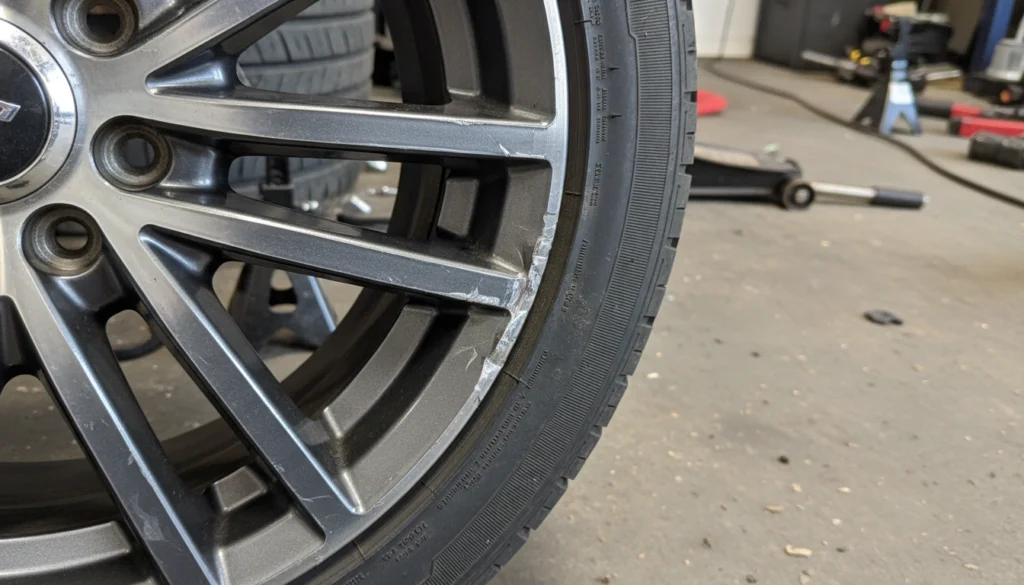
4. Visible Damage on the Rim
Sometimes the damage is obvious if you look closely.
What to check:
- Dents or flat spots on wheel edge
- Cracked alloy surface
- Warping or uneven shape
- Scratches near the lip of rim
Use a flashlight and rotate the wheel slowly for a proper check.
5. Strange Tire Wear Pattern
A bent rim often causes uneven tire wear.
Look for:
- One side of tire wearing faster
- Bald spots on tread
- Uneven rubber texture
This happens because the tire doesn’t roll evenly on the road.
6. Clicking or Thumping Noise
A bent rim may create unusual sounds while driving.
You might hear:
- Thumping at regular intervals
- Clicking noise when turning
- Metallic vibration sounds
These noises usually increase with speed.
7. Wheel Balancing Issues
Even after balancing, the problem returns quickly.
Signs:
- You recently balanced wheels
- Vibration still exists
- Tires feel “off” again within days
If balancing doesn’t fix it, the rim may be structurally bent.
Simple DIY Check for a Bent Rim
You don’t always need a mechanic to get a basic idea.
Step-by-step check:
- Park your car on a flat surface
- Inspect each wheel closely
- Slowly rotate wheel (if lifted)
- Look for wobbling or uneven edges
- Check for air leaks around tire edge
This won’t replace professional inspection but gives a strong indication.
Professional Method: How Mechanics Confirm It
Auto repair shops use specialized tools.
They check using:
- Wheel balancing machine
- Rim straightness gauge
- Road force testing machine
These tools measure even tiny deviations invisible to the eye.
Is It Safe to Drive With a Bent Rim?
Short answer: Not really.
Driving with a bent rim can lead to:
- Tire blowouts
- Poor braking performance
- Steering instability
- Suspension damage
Even a small bend can become worse over time, especially at high speeds.

Bent Rim vs Damaged Tire: How to Tell the Difference
Sometimes the issue is not the rim but the tire.
Bent rim signs:
- Vibration even with new tire
- Air leaks without puncture
- Visible rim dent
Tire damage signs:
- Visible cuts or punctures
- Bulges on tire surface
- Noise only from one tire
A proper inspection helps separate the two.
Can a Bent Rim Be Fixed?
Yes, in many cases it can be repaired.
Repair options:
1. Rim Straightening
- Uses hydraulic pressure
- Fixes minor bends
- Common and affordable
2. Welding (for cracks)
- Repairs small cracks
- Not always recommended for safety-critical areas
3. Replacement
- Best option for severe damage
- Safer long-term solution
For Mitsubishi and similar vehicles, OEM rims or high-quality replacements from trusted auto parts sources like Mitsubishi Auto Store ensure proper fit and safety.
Repair Cost Overview (Realistic Range)
- Minor straightening: $50 – $150
- Moderate repair: $100 – $300
- Replacement rim: $200 – $800+
Luxury or alloy wheels cost more.
How to Prevent Rim Damage
Prevention saves money and stress.
Follow these tips:
- Avoid potholes when possible
- Drive slowly on rough roads
- Maintain proper tire pressure
- Don’t overload your vehicle
- Inspect wheels regularly
Simple habits can extend rim life significantlyFinal Thoughts
Knowing how to tell if a car rim is bent is important for every driver. Many symptoms—like vibration, air leaks, or uneven tire wear—can point to rim damage, but the key is early detection.
If you notice even one or two warning signs, it’s better to inspect the rim immediately before the problem gets worse.
Quick recap:
Vibration + air leak + uneven wear = strong bent rim signal
Fixing it early can save you from expensive tire and suspension repairs later.
For quality replacement parts and vehicle maintenance support, platforms like mitsubishiautostore can help you find compatible wheel and rim solutions for Mitsubishi vehicles.