How Much Does It Cost to Install a Front Bumper? (2026 Complete Guide)
Replacing or installing a front bumper is one of the most common car repair jobs drivers face after an accident, scratch, or parking impact. Whether it’s a minor crack or a completely damaged bumper, the first question most car owners ask is simple: How Much Does It Cost to Install a Front Bumper?
Understanding how much does it cost to install a front bumper can help you prepare for repair expenses and avoid unexpected charges at the body shop.
The answer to how much does it cost to install a front bumper depends on factors such as your vehicle model, the type of bumper, paint requirements, and labor costs in your area.
“How much does it cost to install a front bumper?”
The answer isn’t fixed because the cost depends on many real-world factors like your car model, bumper type, labor charges, and whether you choose OEM or aftermarket parts. In this guide, we break everything down in a simple, human-friendly way so you can understand exactly what you might pay—and how to avoid overpaying.
This article is especially useful if you’re browsing parts from automotive platforms like mitsubishiautostore or planning a replacement for your Mitsubishi or similar vehicle brand.
Quick Answer: Front Bumper Installation Cost (2026)
On average, here’s what you can expect:
- Basic aftermarket bumper installation: $150 – $400
- OEM bumper installation: $300 – $900
- Luxury or modern vehicle bumper installation: $700 – $2,000+
- Painting + installation combined: $400 – $1,500
In some cases, if sensors, cameras, or ADAS systems are involved, the price can go even higher.
But why is there such a big range? Let’s break it down.
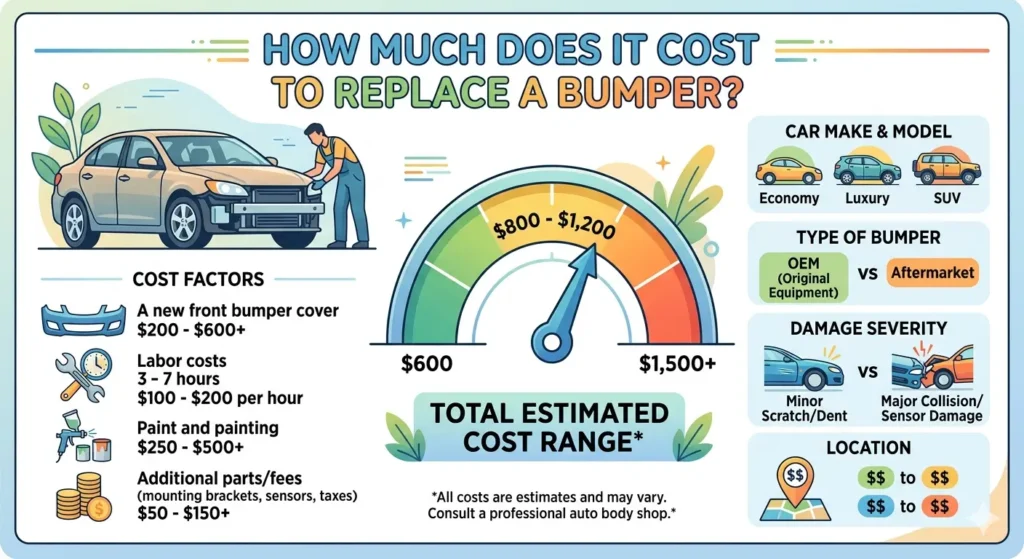
What Affects Front Bumper Installation Cost?
There is no single fixed price because bumper installation is not just “screwing in a part.” Modern vehicles require careful alignment, painting, wiring, and calibration.
Here are the main cost factors:
Type of Bumper (OEM vs Aftermarket)
This is the biggest factor affecting cost.
OEM Bumper (Original Equipment Manufacturer)
- Made by your car’s manufacturer
- Perfect fit and finish
- Higher price but better quality
Cost: $250 – $1,200+
Aftermarket Bumper
- Made by third-party companies
- Cheaper but may need adjustments
- Quality varies depending on brand
Cost: $100 – $600+
OEM parts are often recommended if you want factory-level finish and durability, especially for vehicles listed on brand-specific parts stores like Mitsubishi auto parts platforms.
2. Labor Charges (Installation Cost)
Labor is a major part of the total price.
What mechanics do during installation:
- Remove damaged bumper
- Inspect mounting brackets
- Fit new bumper
- Align properly
- Secure bolts and clips
- Check sensors and lights
💰 Average labor cost:
- $100 – $400 (standard cars)
- $300 – $800 (complex vehicles)
Luxury cars take longer because they require more precision and system calibration.
3. Painting Cost (If Needed)
Most bumpers come unpainted.
Painting includes:
- Surface preparation
- Primer application
- Color matching
- Clear coat finish
💰 Cost:
- $100 – $500 depending on paint quality
If your car requires perfect factory color matching, expect higher pricing.
4. Sensors and Technology (Modern Cars)
New cars are not just plastic bumpers anymore. They include:
- Parking sensors
- Front cameras
- Radar systems (ADAS)
- Fog lights integration
These systems require recalibration after installation.
💰 Extra cost:
- $100 – $600+
This is why newer vehicles cost significantly more to repair.

5. Car Brand and Model
Different cars have different bumper designs.
Example:
- Small sedans → cheaper installation
- SUVs and trucks → higher labor and material cost
- Luxury cars → expensive due to complex systems
A Mitsubishi vehicle bumper replacement from platforms like Mitsubishi Auto Store may fall in the mid-range depending on model and trim level.
Realistic Total Cost Breakdown
Let’s look at a realistic full example:
Example 1: Budget Car Repair
- Aftermarket bumper: $200
- Labor: $150
- Painting: $150
Total: $500
Example 2: Mid-Range Car (Like Mitsubishi SUV)
- OEM bumper: $500
- Labor: $250
- Painting: $250
- Sensor setup: $150
Total: $1,150
Example 3: Luxury Vehicle
- OEM bumper: $1,000+
- Labor: $500+
- Painting: $400
- Calibration: $300+
Total: $2,000 – $2,500+
Can You Install a Front Bumper Yourself?
Technically yes—but it depends on your skill level.
DIY installation is possible if:
- No sensors are involved
- Basic bumper design
- You have tools like socket set and jack
- No painting required
But DIY is NOT recommended if:
- Your car has ADAS sensors
- Bumper needs painting
- Alignment must be perfect
- Wiring is involved
Even a small mistake can lead to poor fitment or sensor malfunction.
Hidden Costs People Often Forget
Many drivers only consider bumper price, but real-world costs include:
- Clips and fasteners replacement ($20–$80)
- Paint blending with fenders ($50–$200)
- Sensor recalibration ($100–$300)
- Workshop diagnostic fees ($30–$100)
These small costs add up quickly.
OEM vs Aftermarket: Which Should You Choose?
Choose OEM if:
- You want perfect fit
- You plan to keep the car long-term
- You care about resale value
Choose Aftermarket if:
- You want to save money
- Car is older or daily-use only
- Minor damage repair is enough
For Mitsubishi owners, OEM parts from trusted sources like mitsubishiautostore often provide better long-term reliability.
How to Save Money on Front Bumper Installation
Here are real, practical ways to reduce cost:
✔ Compare multiple workshops
Prices vary a lot between garages.
✔ Buy parts separately
Sometimes buying the bumper online is cheaper than workshop pricing.
✔ Avoid unnecessary OEM upgrades
If the car is older, aftermarket may be enough.
✔ Bundle services
Painting + installation packages are often cheaper together.
How Long Does Installation Take?
Average time:
- Simple installation: 1–2 hours
- With painting: 1–2 days
- With sensors and calibration: 2–3 days
Paint drying and curing takes the most time.

Signs You Need a New Front Bumper
Not all damage requires replacement. But you should install a new bumper if:
- Deep cracks are visible
- Mounting clips are broken
- Sensor holes are damaged
- Structural integrity is compromised
- Repair cost is close to replacement cost
Final Thoughts
So, how much does it cost to install a front bumper?
The realistic answer is:
Anywhere from $300 to $2,000+, depending on your car and requirements.
The biggest factors are:
- Bumper type (OEM vs aftermarket)
- Labor complexity
- Painting needs
- Sensor technology
If you want long-lasting quality and a perfect fit, OEM parts are usually the safest choice. Understanding how much does it cost to install a front bumper can help you decide whether OEM or aftermarket parts are the better option for your budget.
For budget repairs, aftermarket options can still work well when installed correctly. However, how much does it cost to install a front bumper often depends on the type of bumper you choose and the labor involved.
If you’re researching how much does it cost to install a front bumper, comparing parts prices before installation can make the process smoother and more cost-effective.
Before making a final decision, remember that how much does it cost to install a front bumper can vary based on your vehicle model, paint requirements, and local labor rates.