how much do rims and tires cost. There’s a particular kind of sticker shock that hits when a tire shop hands you a quote for “wheels and tires” instead of just tires. Suddenly you’re not looking at one number, you’re looking at two separate categories of cost stacked on top of each other, plus a handful of line items you didn’t know existed. If you’ve ever stared at an invoice wondering which part is the rim, which part is the tire, and why the total is so much higher than you expected, this guide is for you.
Here’s the full picture: realistic price ranges for rims and tires separately, what it costs when you buy them together, the installation fees that always seem to show up at the end, and how to spend less without compromising on safety.
Quick Answer
For tires alone, expect to pay $80 to $300 per tire for most passenger vehicles, or roughly $400 to $1,500 for a full set of four including installation. For rims alone, $75 to $800+ per wheel depending on material and size, or $600 to $1,600 for a set of four mid-range alloy wheels. Buy rims and tires together as a package — common when upgrading to a new wheel size or style — and the combined total typically lands between $800 and $3,500 for a full set of four, depending heavily on wheel size, tire performance category, and brand.
Tire Costs, Broken Down by Vehicle Type
Tires are priced largely by size and the load they’re built to carry, which is why a compact sedan and a full-size truck can have wildly different numbers attached to what looks like “the same purchase.”
| Vehicle Type | Typical Cost Per Tire | Full Set of 4 (Tires Only) |
|---|---|---|
| Compact/sedan | $80–$250 | $320–$900 |
| SUV/crossover | $120–$350 | $480–$1,400 |
| Truck/large SUV | $150–$500+ | $600–$2,000+ |
| Performance/sports car | $200–$500+ | $800–$2,000+ |
A few things consistently push individual tire prices toward the higher end of these ranges: larger diameters, low-profile sidewalls, specialized tread patterns (off-road, winter, or high-performance summer compounds), and premium brand names with established reputations for longevity or grip.
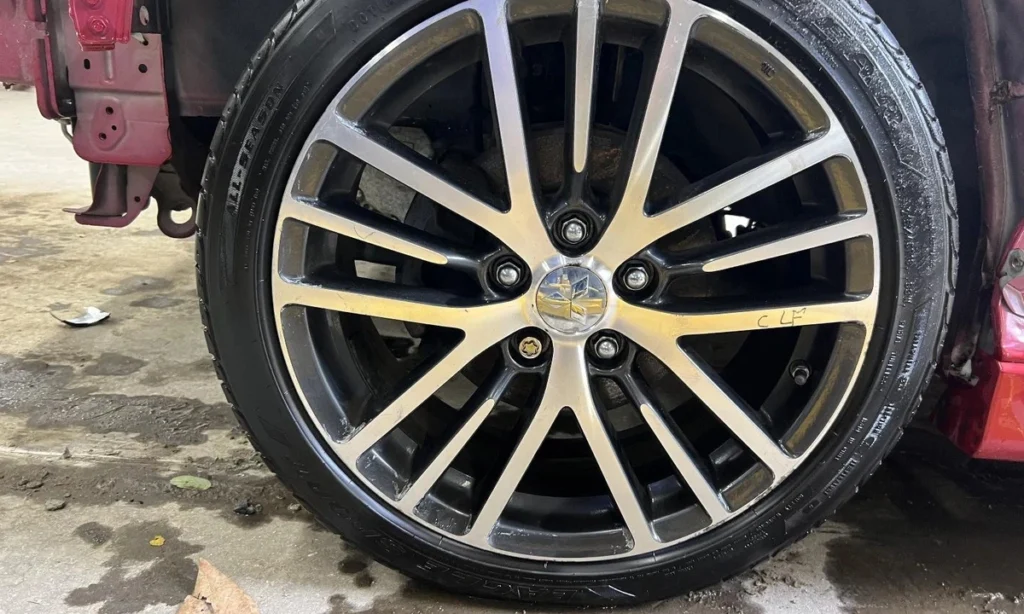
Budget and mid-tier brands can meet safety standards perfectly well while costing noticeably less — the gap between a recognizable premium name and a solid mid-tier option is often less about safety and more about tread life, ride comfort, and warranty coverage.
Rim Costs, Broken Down by Material and Size
Rims follow a different cost logic than tires — material and manufacturing process matter more than raw size alone, although size still plays a real role.
- Steel wheels: the budget option, typically $50–$150 per wheel new. Heavier than alloy, but simple, durable, and inexpensive to replace.
- Cast aluminum alloy wheels: what most vehicles on the road actually wear, running roughly $100–$400 per wheel depending on diameter and design complexity. This is the sweet spot for most drivers balancing weight, looks, and cost.
- Forged aluminum wheels: a more involved manufacturing process that compresses the metal’s grain structure for extra strength at a lower weight, typically $400–$1,500+ per wheel.
- Carbon fiber wheels: the premium tier, often starting around $2,000 per wheel for ultralight, high-stiffness construction.
Size adds its own multiplier on top of material. A 16-inch alloy wheel might run $80–$180, while the same design in a 20-inch diameter can climb to $400–$600 or more, simply because of the extra material and machining time involved.
What It Costs to Buy Rims and Tires Together
Buying a matched set — new wheels paired with new tires sized correctly for them — is common any time someone wants to change wheel size, switch to a more aggressive look, or simply replace both at once rather than staggering the expense. Total packages for a full set of four typically run $800 to $3,500, with the wide range driven by:
- Wheel material and size: a basic steel-wheel-plus-budget-tire package sits at the low end; forged wheels with performance tires sit at the high end.
- Tire performance category: all-season touring tires cost less than performance summer tires or aggressive off-road tread, even at identical sizes.
- Brand tier on both halves of the equation: name-brand wheels paired with name-brand tires can roughly double the cost compared to value-tier versions of both.
A practical mid-range example: a set of four 17-inch aluminum alloy wheels priced around $1,000 (roughly $250 each), paired with a set of mid-tier all-season tires at $150–$200 each, lands the total package somewhere around $1,600–$1,800 before installation. That’s a realistic number for a popular import sedan or compact crossover wearing a tasteful, daily-driver-friendly upgrade — not an exotic or show-car build.
The Installation Costs Nobody Mentions Upfront
The price tag on the wheels and tires themselves is rarely the entire bill. These line items show up consistently enough that it’s worth budgeting for them from the start rather than being surprised at checkout:
- Mounting and balancing: $15 to $45 per tire, or roughly $60–$180 for a full set of four. Larger wheels and low-profile tires push toward the higher end.
- TPMS service: Most vehicles built after 2008 have tire pressure sensors, and reinstalling, resealing, or reprogramming them during a wheel-and-tire swap typically adds $5–$30 per wheel.
- Valve stems: A small but standard add-on, usually a few dollars per wheel.
- Old tire/wheel disposal fee: Many shops charge $5–$15 per tire to responsibly dispose of your old set.
- Alignment: Not always required, but worth budgeting $75–$200 for, especially if you’re changing wheel offset or width from the factory setup.
- Shipping: If you’re buying online, freight for a full set of wheels (sometimes with tires already mounted) can range from free to $50–$100+, depending on the retailer and your location.
Add these together, and a quoted “$1,600 set” can realistically land closer to $1,800–$2,000 out the door. That’s not a hidden fee trying to catch you off guard — it’s simply the full scope of what professional installation involves, and knowing it ahead of time means no surprise at pickup.
New Car Factory Upgrades vs. Aftermarket
If you’re speccing a new car and considering the factory wheel upgrade option, it’s worth knowing that manufacturer-installed wheel upgrades commonly add $1,000 or more to the price of a vehicle for a full set of four, often financed into the loan rather than paid upfront. Aftermarket wheel-and-tire packages, by contrast, frequently deliver comparable looks and performance for meaningfully less, especially when purchased separately rather than bundled into vehicle financing. The trade-off is that factory upgrades come with guaranteed fitment and a single point of warranty contact, while aftermarket requires a bit more homework on bolt pattern, offset, and load rating to get right.
Used and Take-Off Sets: The Budget Option Worth Considering
Not every situation calls for a brand-new set of both. “Take-off” wheel-and-tire sets — wheels removed from a vehicle shortly after purchase, often because the owner immediately swapped to a different style, and still wearing lightly used or even new tires — show up regularly on online marketplaces and at specialty wheel shops. These can run 30–60% below the cost of buying new wheels and new tires separately, since you’re essentially getting gently used parts that were barely driven on.
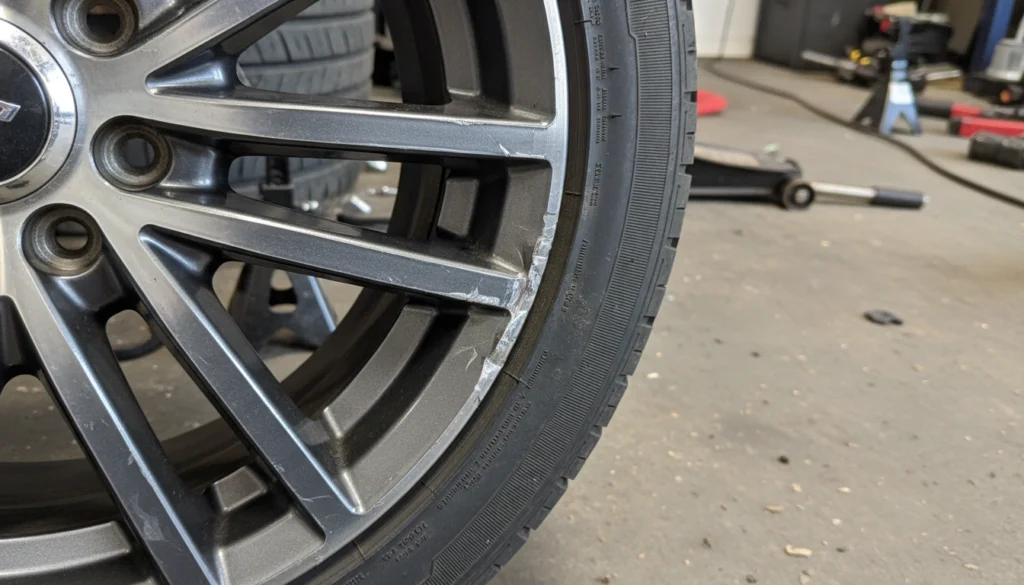
The trade-off is that you’re relying on the seller’s honesty about tire tread depth and wheel condition, so a quick in-person inspection or detailed photos of the tread and any curb rash matter more here than with a straightforward new purchase. For an older daily driver, a take-off set is often the smartest math in this entire guide; for a newer car still under warranty or a build where exact specs matter, new is usually the safer call.
A Real-World Example
To put real numbers against this: a set of four 17×7.5-inch aluminum alloy wheels with a dual 5×100/5×114.3 bolt pattern — a fitment that covers a wide range of Japanese and import vehicles, including several Mitsubishi models — commonly runs around $1,000 for the complete set of four, or about $250 per wheel. That sits squarely in the mid-range alloy bracket described above, and pairing a set like that with a quality all-season tire in the $150–$180 range per tire brings a realistic combined total to roughly $1,600–$1,700 before installation.
This is the kind of fitment-specific shopping Mitsubishi Autostore is built around for Mitsubishi owners — their rims selection covers common bolt patterns for models like the Lancer, Lancer Evolution, Eclipse, Galant, and Outlander, which removes a lot of the cross-checking work involved in confirming a generic listing will actually fit. Since they specialize in Mitsubishi-specific parts rather than a catch-all inventory, it’s a useful starting point if you’d rather not gamble on fitment from a marketplace listing with limited compatibility details.
How to Spend Less Without Cutting Corners on Safety
A few habits consistently make a real difference in the final number:
- Buy a full set, not pieces over time. Per-unit pricing on both wheels and tires almost always improves when bought as a complete set, and it avoids the mismatch of new and worn components side by side.
- Ask for an itemized, out-the-door quote upfront. Comparing a $1,200 online price against a $1,400 local shop quote means nothing if one includes mounting, balancing, and disposal and the other doesn’t.
- Consider mid-tier tire brands. The jump from a well-reviewed mid-tier tire to a flagship premium brand often costs significantly more for a tread-life and comfort improvement that many daily drivers won’t notice in everyday use.
- Match wheel size to your actual needs. A slightly smaller diameter than the maximum your car can fit often costs less on both the wheel and the tire, without meaningfully changing how the car drives day to day.
- Double-check fitment specs before ordering anything aftermarket. Bolt pattern, offset, and hub bore mismatches are the costliest mistakes in this category — a wheel that’s the “right” diameter but wrong offset can rub against the suspension or stick out past the fender, turning a savings move into an expensive do-over.
Is it cheaper to buy rims and tires together or separately?
Usually together, when you’re buying a full new set of both. Bundled packages often include mounting and balancing in the quoted price, and buying as a set avoids paying separate markups at three different counters.
How often do rims and tires need to be replaced at the same time?
Not every time. Tires wear out roughly every 40,000–70,000 miles depending on driving habits, while rims can last the life of the vehicle barring damage. They typically get replaced together only when changing wheel size or style, or after damage to both from the same incident.
Do bigger rims always mean a bigger total bill?
Generally yes, on both halves of the equation — larger-diameter wheels cost more to manufacture, and the lower-profile tires that typically pair with them cost more too. Going up a size or two from factory spec is a meaningful, not marginal, cost increase.
What’s the biggest hidden cost people forget to budget for?
Installation. Mounting, balancing, TPMS service, and possible alignment work can add $150–$400 on top of the wheel-and-tire price itself, and that gap catches a lot of first-time buyers off guard.
Are aftermarket wheel-and-tire packages safe?
Yes, as long as fitment specs match your vehicle correctly and you’re buying from a reputable seller. The risk isn’t aftermarket parts themselves — it’s mismatched bolt patterns, offsets, or load ratings, which is why double-checking specs against your vehicle’s requirements matters more than brand name alone.
The Bottom Line
Rims and tires are priced by genuinely different logic — tires by size, load, and tread technology; rims by material and manufacturing process — but together they follow a predictable pattern once you know where your vehicle and goals fall on the spectrum. Budget realistically for installation on top of the parts themselves, double-check fitment before buying aftermarket, and a full rims-and-tires upgrade stops being a mystery number on an invoice and becomes a cost you can actually plan around.