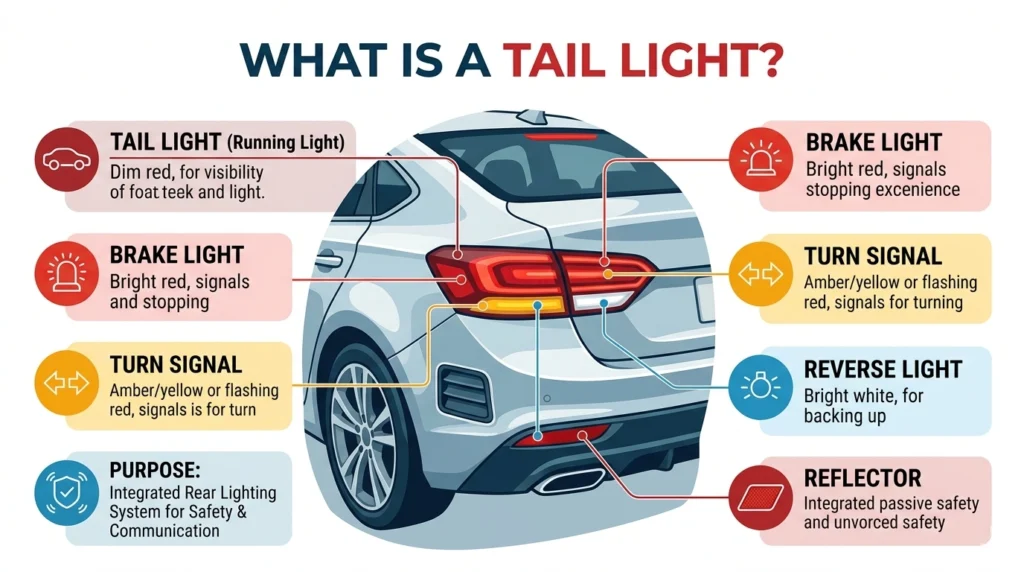
Tail lights are one of the three key rear lights on a car and are essential safety components located at the rear of every vehicle. They illuminate whenever your headlights are on, serving two critical functions: making your vehicle visible to others in low-light conditions and signaling your intentions when braking or turning. While they might seem like a simple part of a car, taillights play a crucial role in preventing rear-end collisions and enhancing overall road safety.
If you’ve ever driven behind another car at night, you’ve definitely noticed those glowing red lights at the back. But have you ever stopped to think:
What is a tail light in a car, and why is it so important?A tail light is a red-colored rear-facing light on a car that automatically illuminates when your headlights are turned on.It might seem like a small component, but tail lights play a huge role in your safety, visibility, and legal compliance on the road. Without them, driving—especially at night or in bad weather—would be extremely dangerous.

In this complete guide, we’ll explain everything in simple terms—from what tail lights are, how they work, their types, common problems, what is a tail light on a car,and how to choose the best ones for your vehicle.
What Is a Tail Light in a Car?
A tail light is a red light located at the rear (back) of your car. Its main job is to make your vehicle visible to drivers behind you, especially in low-light conditions like night, rain, fog, or snow.
Simple Definition:
A tail light is a safety light that turns on when your headlights are activated and helps others see your car from behind.
Why Tail Lights Are So Important
You might not think about them often, but taillights are critical for safe driving.
Prevent Accidents
Tail lights alert drivers behind you about your presence, reducing the risk of rear-end collisions.
Improve Night Visibility
At night, your car becomes almost invisible without proper lighting. Tail lights ensure you’re always seen.
Legal Requirement
Driving with a broken taillight can lead to traffic fines or penalties in many countries.
Essential in Bad Weather
Rain, fog, or dust storms can reduce visibility—tail lights help maintain safety in these conditions.
How Do Tail Lights Work?
Tail lights are connected to your car’s electrical system and operate automatically.
Basic Function:
- When you turn on your headlights → tail lights turn on
- When you press the brake → brake lights become brighter
- When you signal → indicator lights blink
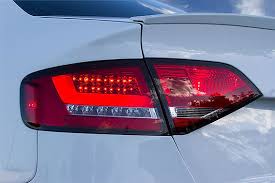
It’s a simple system, but incredibly effective.
Types of Tail Lights in Cars
Not all tail lights are the same. Modern cars come with different types of lighting technology.
Halogen Tail Lights (Traditional)
- Most common in older vehicles
- Affordable and easy to replace
- Uses filament bulbs
Best for: Budget-friendly replacements
LED Tail Lights (Modern Standard)
- Brighter and more energy-efficient
- Faster response time
- Long-lasting
Best for: Most modern vehicles and upgrades
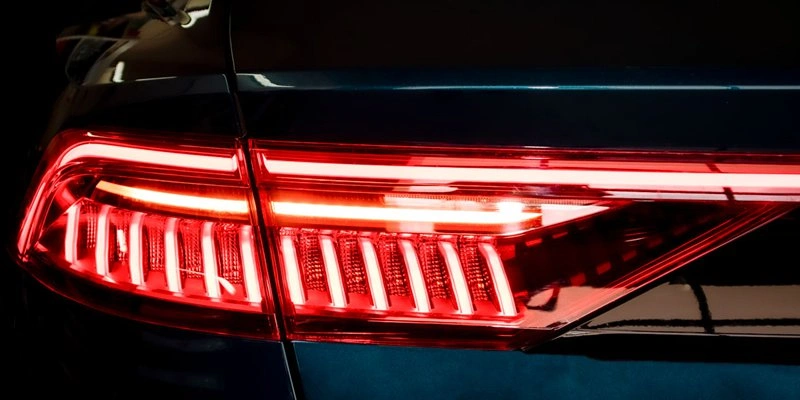
OLED Tail Lights (Premium)
- Found in luxury cars
- Ultra-slim and stylish
- Even light distribution
Best for: High-end aesthetics and performance
Parts of a Tail Light
A tail light isn’t just one piece—it’s made up of several components:
- Lens Cover: Protects internal parts
- Bulb or LED Unit: Produces light
- Housing: Holds everything together
- Wiring: Connects to the car’s electrical system
If one part fails, you may not need to replace the whole unit.
What Is a Taillight in a Car? A Simple Guide
If you’ve ever wondered, what is a taillight in a car, the answer is simpler than you think. A taillight is the red light fitted at the rear of every vehicle that makes your car visible to drivers behind you, especially after dark or in poor weather. Without it, other drivers would have no warning of your presence on the road.
So what are taillights on a car, exactly? They’re not just one bulb — most vehicles use a cluster of lights bundled into a single housing. This typically includes the running light (stays on whenever headlights are on), the brake light (brightens when you press the pedal), and the turn signal (flashes to show direction).
Tail Lights on Car vs. Tail Light on Car: Is There a Difference?
You’ll often see both “tail lights on car” and “tail light on car” used interchangeably online, and that’s fine — they refer to the same rear lighting system, just singular versus plural depending on how many bulbs you’re discussing.
Why Tail Lights of Car Matter for Safety
The tail lights of a car aren’t just a legal requirement; they’re a critical safety feature. A burnt-out bulb can mean the difference between being seen and being rear-ended.
Need replacement parts? Genuine, fit-perfect taillights are just a click away.
Common Tail Light Problems
Like any car part, tail lights can wear out or get damaged.
1. Burnt-Out Bulb
- Most common issue
- Easy and cheap to fix
2. Moisture Inside the Light
- Caused by cracks or poor sealing
- Can damage internal components
3. Wiring Issues
- Loose or damaged wires
- May require professional repair
4. Cracked Lens
- Often caused by minor accidents
- Can reduce visibility and lead to fines
When Should You Replace a Tail Light?
You should replace your taillight if:
- It’s not turning on
- The light is dim or flickering
- The lens is cracked or broken
- Moisture is visible inside
Don’t delay—this is a safety-critical component.
How Much Does a Tail Light Cost?
The cost varies depending on your car and the type of light.
- Basic tail light: $50 – $100
- Mid-range (LED): $100 – $200
- Premium models: $200 – $300+
Labor costs can add $20 – $150, depending on complexity.
For affordable and reliable options, check:
Mitsubishi Auto Store
Can You Replace a Tail Light Yourself?
Yes! In many cases, replacing a taillight is simple.
DIY Replacement
- Takes 20–30 minutes
- Requires basic tools
- Saves money
When to Get Help
- Complex wiring
- Modern LED systems
- Luxury vehicles
What Happens If You Drive Without Tail Lights?
Driving without working taillights can lead to:
- 🚗 Higher accident risk
- 💸 Traffic fines
- ❌ Failed vehicle inspection
It’s not worth the risk—fix it immediately.
Tips for Choosing the Best Tail Lights
Want to upgrade or replace your taillights? Follow these tips:
Choose the Right Type
LED is the best balance of price and performance
Check Compatibility
Make sure it fits your car model
Compare OEM vs Aftermarket
- OEM = perfect fit
- Aftermarket = cheaper
Look for Warranty
Always choose products with a guarantee.👉 Browse quality options here:
Shop Tail Lights Now
What is a taillight on a car?
A taillight is a red light mounted at the rear of a vehicle that activates when the headlights are turned on. It helps other drivers see your car at night or in low-visibility conditions.
What is the difference between a taillight and a brake light?
Tail lights vs. brake lights is a common point of confusion for many drivers. Tail lights are always on when your headlights are activated, emitting a steady red glow. Brake lights are brighter and only light up when the brake pedal is pressed, signaling deceleration.
What does a taillight assembly consist of?
A taillight assembly typically consists of a housing, lens, light source (bulb or LED), wiring, and sometimes a built-in reflector or light guide
What is a taillight housing?
The taillight housing is the outer covering of the assembly, which holds all the internal components in place and protects them from dust, moisture, and damage.
What are taillight components?
Tail light components include the housing, lens, bulbs or LEDs, connectors, and any integrated reflectors or electronic modules required for functionality.
Conclusion: Improve your car’s safety and style with confidence
Tail lights are more than just rear-facing lights—they are essential safety features that protect you and others on the road. Understanding what tail lights are, how they function, and what components make up a tail light assembly empowers you to make better choices when it comes to replacement or upgrades.
So, what is a tail light in a car?
It’s a simple but essential safety feature that keeps you visible, prevents accidents, what is a tail light in a car, and ensures legal driving.
Even though it’s a small component, it plays a massive role in protecting you and others on the road.
- Tail lights improve visibility and safety
- They are legally required
- Easy to replace in most cases
- Affordable but extremely important
- what is a tail light in a car
Don’t wait until it becomes a problem.
Upgrade or replace your tail lights today:
Visit Mitsubishi Auto Store
Drive safer. Stay visible. Make every journey secure.