When to Turn Car Seat Around: The Complete Parent’s Guide (2024)
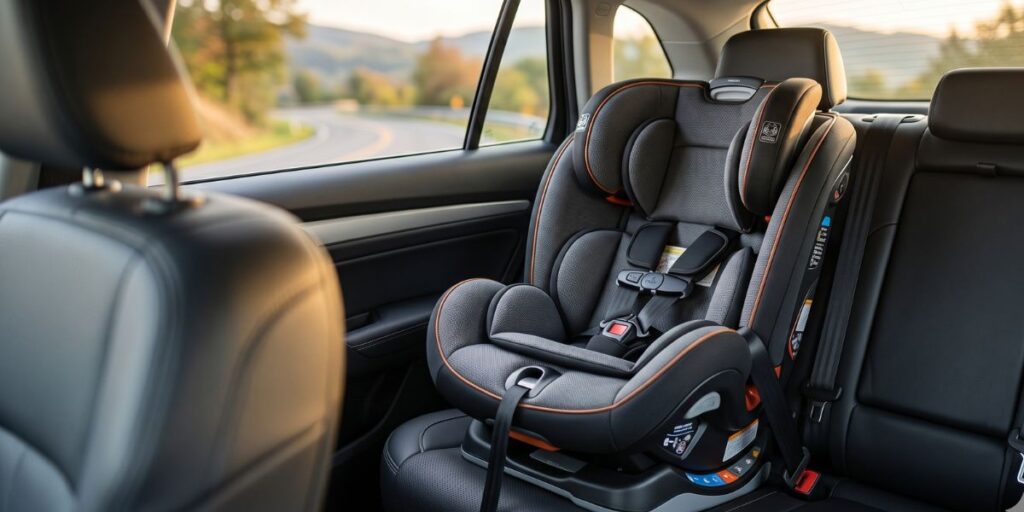
Every new parent asks the same question at some point: when to turn car seat around? It usually happens when your baby starts looking cramped in the rear-facing position, or when a well-meaning relative insists the child looks uncomfortable facing backward. The truth is, the timing of this switch is one of the most important safety decisions you will make for your child.
This guide breaks everything down — the rules, the science, the signs, and the real-life mistakes parents make every day. By the end, you will know exactly when to make the switch, and how to do it safely.
Why the Direction of the Car Seat Matters More Than You Think
Car seats are not just about keeping your child strapped in. They are about physics.
When a car crashes, the force of impact is enormous. A rear-facing car seat spreads that force across your child’s entire back, head, and neck. This is critical because babies and toddlers have heads that are proportionally much heavier than their bodies, and their neck muscles are still developing.
A forward-facing seat, on the other hand, puts all the crash stress on the harness straps. Those straps pull against your child’s chest and shoulders. For older children with more developed bones and muscles, this is fine. For infants and young toddlers, it can lead to serious spinal injury.
The difference in injury rates between rear-facing and forward-facing in a frontal crash — the most common type — can be significant. Studies consistently show that rear-facing is far safer for younger children.
When to Turn Car Seat Around: The Official Guidelines
American Academy of Pediatrics (AAP) Recommendation
The AAP updated its guidance in recent years. The current recommendation is straightforward:
Keep your child rear-facing as long as possible, until they reach the maximum height or weight limit of their rear-facing car seat.
This replaces the older “rear-face until age 2” rule. The focus now is on your specific car seat’s limits, not a blanket age requirement.
Most convertible car seats allow rear-facing up to:
- 40 to 50 pounds in weight
- 40 to 49 inches in height (varies by model)
Many children can remain rear-facing well past their third birthday. Some can stay rear-facing until age 4 or even 5, depending on the seat.
The Real-Life Rule of Thumb
Do not flip the seat around because your child looks uncomfortable. Children are naturally flexible. A toddler with their legs bent or feet touching the back seat is perfectly fine — and still much safer facing backward.
Turn the seat around only when one of these is true:
- Your child has exceeded the rear-facing weight limit of your current seat
- Your child’s head is within one inch of the top of the seat
- Your child’s shoulders rise above the highest harness slot when rear-facing
Common Age-Based Questions Parents Ask
Is 1 Year Old Too Early to Turn the Car Seat Around?
Yes, in most cases. While old guidelines once said you could flip at 1 year, modern safety research strongly advises against it unless your child has physically outgrown the rear-facing seat. Most 1-year-olds are nowhere near the weight or height limits of a good convertible car seat.
If your child is 1 year old and 20 pounds, they still have a long way to go before hitting the limits of most rear-facing seats.
Can I Turn the Car Seat Around at 2 Years Old?
Again, only if they have reached the physical limits of the seat — not just because they turned 2. Many 2-year-olds still fit comfortably and safely in rear-facing mode.
What About 3 or 4 Year Olds?
This is where most children legitimately start approaching their seat’s rear-facing limits. A tall, heavier 3-year-old might hit the weight cap of their seat. A smaller 4-year-old might not. Always check the specific seat’s manual.
How to Know You’ve Hit the Rear-Facing Limit
Check the Head Room
Look at the gap between the top of your child’s head and the top of the car seat shell. If there is less than one inch of space, it is time to transition.
Check the Harness Slots
The harness straps should be at or below your child’s shoulders when rear-facing. If the highest slot is now below their shoulders, the seat no longer fits them properly.
Check the Weight
Weigh your child and compare to the seat’s rear-facing weight maximum. This is listed in your car seat manual and usually printed on the seat itself.
How to Transition to a Forward-Facing Car Seat Safely
Once your child has genuinely outgrown the rear-facing position, here is how to make the switch correctly.
Step 1: Choose the Right Seat
You will need a forward-facing seat with a harness. Most convertible seats can be flipped from rear-facing to forward-facing. Others are dedicated forward-facing seats with a harness good up to 65 or 80 pounds.
Do not rush to a booster seat. Children should stay in a harnessed forward-facing seat until they reach that seat’s maximum weight or height.
Step 2: Install It Correctly
Forward-facing installation is different from rear-facing. You will use either the seat belt or the LATCH system (Lower Anchors and Tethers for Children). One critical step many parents skip: always use the top tether strap when forward-facing. This strap anchors the top of the seat to the car and dramatically reduces how far forward your child’s head moves in a crash.
Step 3: Check the Harness Fit
With your child in the forward-facing seat, the harness straps should sit at or above their shoulders. The chest clip should be at armpit level. Run the pinch test — if you can pinch any slack in the harness at the collarbone, it is too loose.
Mistakes Parents Make When Turning the Car Seat Around
Turning Too Early Because of Leg Room
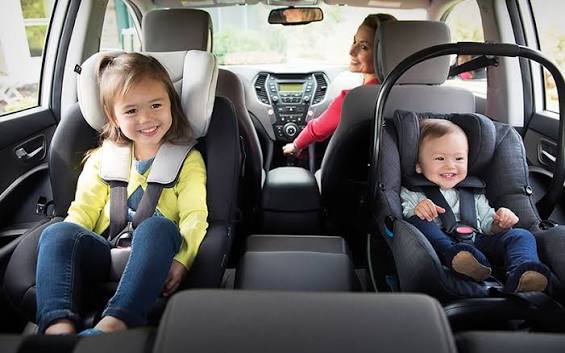
This is the number one mistake. Parents see their toddler’s knees bent and feet pushing against the vehicle seat, and assume the child must be uncomfortable or in danger. They are not. Leg comfort is never a reason to flip the seat. Safety always comes first.
Using the Wrong Seat for the Child’s Size
Some parents jump to a booster seat too early. Booster seats are designed for children who have outgrown a harnessed seat — typically 40 pounds and above, often older. A harness is always safer than a booster at younger ages.
Skipping the Top Tether
Once you flip to forward-facing, the top tether is not optional. It is a critical safety component. Many parents do not know the tether anchor exists in their vehicle, or they leave the strap dangling without attaching it.
Not Re-Reading the Manual
Car seat rules change between rear-facing and forward-facing installation. If you just flip the seat and assume the old installation method still applies, you could be doing it wrong. Always re-read the manual when switching directions.
Signs Your Child Is Ready to Face Forward (Physically, Not Emotionally)
Children do not emotionally “need” to face forward. They adapt quickly to whatever position they are placed in. The readiness signs are entirely physical:
- Weight has reached or is close to the seat’s rear-facing maximum
- Head is within one inch of the top of the seat
- Shoulders are above the highest harness slot
- Child is old enough that a forward-facing harnessed seat is appropriate (typically 2 years or older, based on development)
Car Seat Types and What They Mean for Timing
Infant Car Seats
These are rear-facing only. Most have a weight limit of 22 to 35 pounds. Once your baby outgrows this seat, you move to a convertible seat — not necessarily to forward-facing.
Convertible Car Seats
These can be used rear-facing and then switched to forward-facing as your child grows. Many have rear-facing limits of 40 to 50 pounds. This is the seat type that gives you the most rear-facing time.
All-in-One Seats
These grow from rear-facing infant use all the way through booster mode. They offer even more flexibility and often the highest rear-facing weight limits on the market.
Real-Life Scenarios: When Other Parents Made the Switch
Sarah, mother of a 3-year-old: “Our pediatrician told us at the 2-year checkup that our daughter was still well within the limits of her seat. We kept her rear-facing until just after her third birthday when she hit the 40-pound limit.”
Marcus, dad of twin boys: “One of our twins was always on the bigger side. He hit the height limit at 2.5 years. The other twin stayed rear-facing until almost 4. Same seats, different kids.”
Priya, first-time mom: “I almost turned the seat at 18 months because my son looked scrunched. Our pediatrician showed me the seat manual and I realized he had another 15 pounds to go before he’d hit the limit. I’m so glad I checked.”
These stories reflect what pediatric safety experts say consistently: most children can and should stay rear-facing longer than parents expect.
What Pediatricians and Safety Experts Say
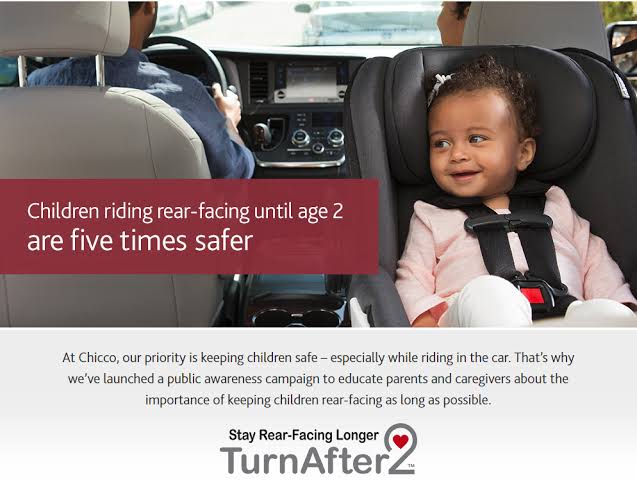
The American Academy of Pediatrics, the National Highway Traffic Safety Administration (NHTSA), and child passenger safety technicians (CPSTs) all agree on the core principle: rear-facing as long as possible, within the seat’s limits.
If you want personalized help with your specific seat and vehicle, find a certified Child Passenger Safety Technician in your area. Many fire stations, hospitals, and community centers offer free car seat checks.
Choosing the Right Car Seat for Extended Rear-Facing
If you want to maximize rear-facing time, look for convertible seats with the highest rear-facing weight limits. Some models allow rear-facing up to 50 pounds.
You also want a seat that fits your vehicle. Not all seats work well in all cars. Check the seat’s dimensions against your back seat space, especially if you have a smaller vehicle.
For parents shopping for quality vehicles and accessories that support family safety, resources like Mitsubishi Auto Store can provide helpful guidance on vehicle compatibility and setup — because the right vehicle environment matters just as much as the right seat.
FAQ
Is it illegal to turn a car seat around before age 2?
In most U.S. states, there is no specific law requiring rear-facing until age 2. Laws vary by state and focus on minimum weight and age requirements. However, safety guidelines from pediatric experts recommend keeping children rear-facing well beyond what the minimum law requires. Always follow both your state’s law and your car seat’s specific limits.
Can my child’s legs touching the seat cause injury if rear-facing?
No. This is a very common myth. Children’s legs touching or resting against the vehicle’s back seat in rear-facing mode does not cause injury. In a crash, their legs may move forward, but the risk of leg injury is far lower than the risk of head and spinal injury from turning forward-facing too soon.
What if my car seat doesn’t fit rear-facing in my car?
Some vehicles have limited back seat space that makes rear-facing difficult. Try different seating positions (center vs. sides). Consider a different car seat model with a smaller footprint. A certified Child Passenger Safety Technician can help you find the best fit for your specific car. Resources like Mitsubishi Auto Store can also help if you are evaluating vehicles for family use.
My child complains about facing backward. Should I flip the seat?
Child discomfort or preference is not a safety reason to switch. Most children who complain adjust quickly. Try distraction, music, or window clings on the side windows. Safety must take priority over comfort preferences, especially when children are too young to understand the risks involved.
How do I know if my forward-facing installation is correct?
The seat should not move more than one inch side to side or front to back at the belt path. The harness should be snug with no pinchable slack at the collarbone. The chest clip should be at armpit level. And critically, the top tether must be attached to your vehicle’s tether anchor point. When in doubt, get a free inspection from a certified technician.
Does the type of car accident matter for which direction is safer?
Frontal crashes are the most common and most severe type. Rear-facing seats perform best in frontal crashes because they cradle the child and distribute force across the whole body. Side impact and rear-end crashes are also serious, but frontal crashes are statistically the biggest risk — which is exactly why rear-facing is so strongly recommended for young children.
Conclusion
The question of when to turn car seat around has a simple answer: not until your child has physically outgrown the rear-facing limits of their seat.
Forget the age myths. Ignore the leg room worries. Do not let social pressure from well-meaning family push you into an early switch. The science is clear, and every pediatric and traffic safety organization in the country agrees — rear-facing is safer, and children should stay that way as long as their seat allows.
Check your seat’s manual. Watch the actual limits: the weight maximum, the head room, and the shoulder harness slots. When your child hits those limits, and not before, make the switch to a forward-facing harnessed seat. Then stay in that harnessed seat until they outgrow it too.
Car seat safety is one of the few areas where being overly cautious costs you nothing and could save your child’s life. Take your time with this decision. Do it right. Your child is worth every extra month of rear-facing.