How Much Do Brakes and Rotors Cost? A Real, No-Fluff Guide for Car Owners
Let’s be honest — the moment your mechanic says “your brakes need attention,” a knot forms in your stomach. Not because you doubt them, but because you have absolutely no idea what you’re about to spend. $200? $800? More?
The truth is, brake and rotor costs vary wildly depending on your vehicle, the parts you choose, and where you get the work done. If you own a Mitsubishi — whether it’s a Lancer Evolution, Outlander, Galant, or Eclipse — this guide is going to save you from overpaying and help you understand exactly what you’re buying and why.
Let’s break it all down.
First, Why Do Brakes and Rotors Wear Out?
Before we talk money, it helps to understand what’s actually happening under your wheels.
Every time you press the brake pedal, brake pads clamp down against spinning metal discs called rotors. The friction slows your car. It’s simple physics — and it’s also why both brake pads and rotors eventually wear down. They’re designed to sacrifice themselves so your car stops safely.
On average:
- Brake pads last between 25,000 and 65,000 miles, depending on your driving style and pad material.
- Rotors typically last 50,000 to 80,000 miles, though aggressive driving, heavy towing, or track use can cut that significantly.
Signs you need new brakes or rotors:
- High-pitched squealing or grinding when braking
- Steering wheel vibration during stops
- Car pulling to one side when you brake
- Brake pedal feels soft or spongy
- Longer stopping distances than usual
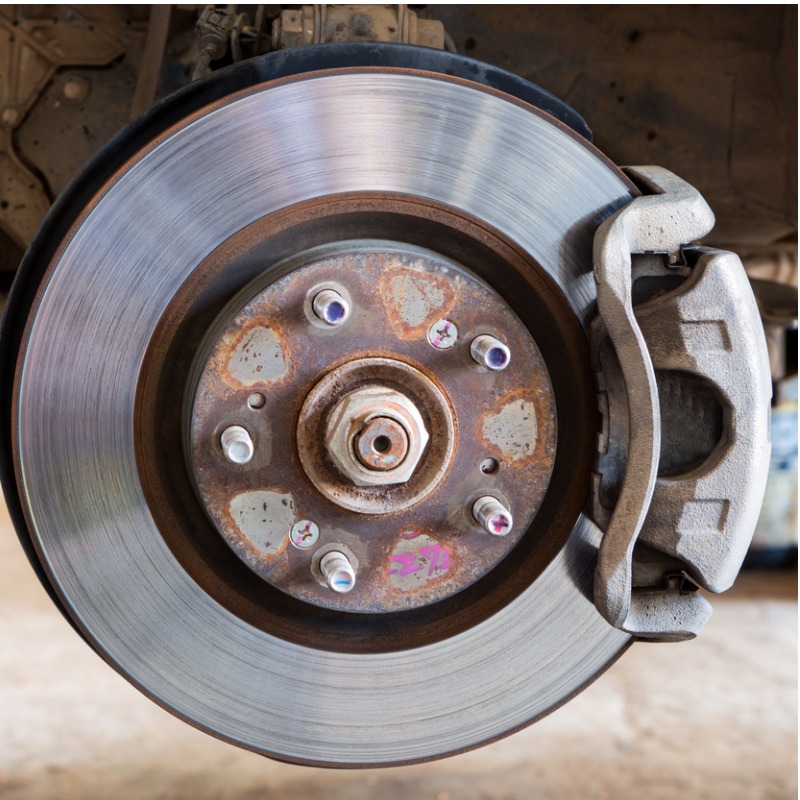
- Visible grooves or “lip” on rotor edges
If any of those sound familiar, read on.
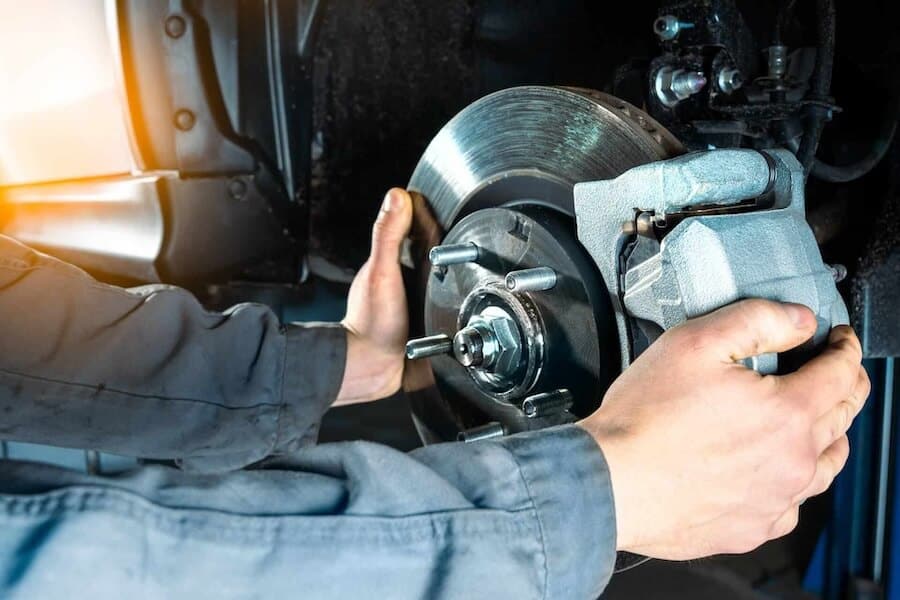
How Much Do Brakes and Rotors Cost? The Real Numbers
Here’s where most guides go wrong — they give you a single “average” number that means almost nothing in practice. The actual cost depends on several real factors.
Brake Pads Cost
Brake pads are sold per axle (front or rear), and prices generally fall into three tiers:
| Pad Type | Cost Per Axle (Parts Only) |
|---|---|
| Economy/Budget | $20 – $50 |
| Mid-Range (OEM-quality) | $50 – $100 |
| Performance/Carbon-Ceramic | $100 – $250+ |
For a Mitsubishi Lancer, standard mid-range pads run $40–$80 per axle. For a performance-focused vehicle like the Lancer Evolution, you may want upgraded pads — especially if you’re doing any spirited or track driving — which can push costs toward $150–$250 per axle.
Rotor Cost
Rotors are sold individually or as a pair. Again, prices vary by quality:
| Rotor Type | Cost Per Rotor |
|---|---|
| Standard OEM-replacement | $30 – $75 |
| Slotted or Drilled Performance | $75 – $150 |
| Two-Piece / Big Brake Kits | $300 – $800+ per rotor |
For the Lancer Evolution specifically, the braking system is performance-oriented from the factory. Models like the Evo 8/9 with Brembo brakes require rotors that match that spec. High-performance two-piece rotors — like the 343mm units for the Evo 9 — represent serious hardware for serious stopping power.
Labor Cost
This is often the biggest variable of all. Labor rates differ dramatically by region and shop type:
| Shop Type | Labor Rate Per Hour |
|---|---|
| Dealership | $120 – $180/hr |
| Independent Shop | $75 – $130/hr |
| Franchise (Midas, Jiffy Lube, etc.) | $80 – $120/hr |
| DIY (you do it yourself) | $0 |
A full brake job — both axles, pads and rotors — typically takes 1.5 to 3 hours of labor. That means:
- Front brakes (pads + rotors): $150 – $400 in labor
- Full brake job, all four corners: $300 – $800+ in labor
Total Cost: What to Expect
When you combine parts and labor, here’s a realistic range for common brake jobs:
| Brake Job Scope | Estimated Total Cost |
|---|---|
| Front brake pads only | $100 – $250 |
| Front pads + rotors | $250 – $500 |
| Rear pads only | $100 – $200 |
| Rear pads + rotors | $200 – $400 |
| Complete brake job (all 4 corners) | $500 – $1,200+ |
| Performance upgrade (e.g., big brake kit) | $1,500 – $4,000+ |
For Mitsubishi Evo owners looking at high-performance caliper and rotor setups — like Alcon 6-piston calipers with 343mm two-piece rotors — you’re entering serious performance territory, and costs reflect that accordingly.
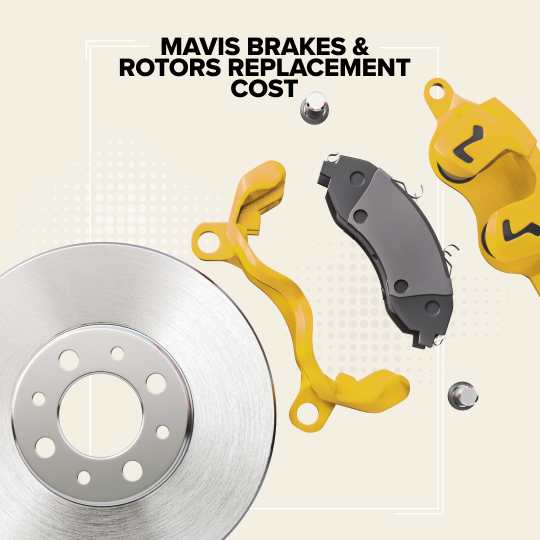
What Affects the Cost the Most?
1. Your Vehicle Make and Model
A standard Mitsubishi Outlander uses relatively common rotor sizes, making parts affordable and widely available. A Mitsubishi Lancer Evolution X, on the other hand, is a rally-heritage sports car with a high-spec braking system. The parts are more specialized, which typically means higher prices.
2. OEM vs. Aftermarket vs. Performance Parts
OEM (Original Equipment Manufacturer) parts are what came on your car from the factory. They’re reliable and perfectly compatible, but they’re not always the best value.
Aftermarket OEM-equivalent parts match factory specs but are often 20–40% cheaper. Reputable brands in this space offer solid quality without the brand premium.
Performance upgrades — slotted rotors, carbon-ceramic pads, big brake kits — go beyond OEM specs. They’re worth considering if you drive aggressively, tow heavy loads, or participate in track events. The Lancer Evolution community, in particular, is well-served by options like AP Racing calipers and Alcon setups that offer meaningfully better performance than stock.
3. All Four Corners vs. One Axle
Many shops will recommend doing brakes in pairs (both fronts or both rears at the same time), which is good practice. Doing all four corners at once is cost-efficient and ensures even braking performance.
4. DIY vs. Professional Install
If you’re mechanically inclined and comfortable with basic tools, brake jobs are one of the more approachable DIY repairs. The job typically involves:
- Jacking up the car and removing wheels
- Removing the caliper and bracket
- Sliding out the old pads and swapping in new ones
- Replacing rotors (straightforward bolt-off, bolt-on for most models)
- Compressing the caliper piston
- Bleeding the brakes if needed
For a Mitsubishi Lancer or Outlander, a competent DIYer with a basic tool set can complete a front brake job in 2–3 hours. You’ll pay for parts only, which can cut your total cost nearly in half.
Mitsubishi-Specific Brake Considerations
If you’re a Mitsubishi owner, a few things are worth knowing:
Lancer Evolution (Evo 7, 8, 9, X)
The Evo’s braking system is its most underrated performance asset. Factory Brembos are excellent, but enthusiasts frequently upgrade to higher-performance setups. Popular choices include:
- AP Racing CP9560/CP9540 6/4-piston calipers — a track-proven setup that significantly improves fade resistance and modulation
- Alcon 6-piston calipers with 343mm two-piece rotors — a complete front brake overhaul suited to serious track use
- High-friction brake pads (Ferodo DS2500, EBC Yellowstuff) — an easy first upgrade for street/occasional track use
Expect to pay $850–$1,500+ for complete AP Racing or Alcon setups, not including installation.
Mitsubishi Outlander
The Outlander is a family SUV, and its brakes reflect that — functional and long-lasting. Standard brake jobs are straightforward and affordable. Front brake pad and rotor replacement typically runs $300–$500 all-in at a shop. There’s no need for performance upgrades unless you’re regularly towing near maximum capacity.
Mitsubishi Galant & Eclipse
Both are older platforms now, which actually works in your favor — parts are widely available and competitively priced. A full four-corner brake job on a Galant or Eclipse can often be done for $500–$800 at a shop, or under $300 if you DIY.
How to Get the Best Price on Brakes and Rotors
Get Multiple Quotes
Never accept the first estimate. Call at least three shops — including a dealership and one or two independent mechanics. Labor rates vary significantly, and so do the brands of parts they source.
Buy Your Own Parts
Many independent mechanics will install parts you supply. If you purchase quality pads and rotors yourself through a reputable auto parts source, you can save 20–40% on the parts cost versus what the shop would charge. Just make sure the parts are the right fit for your specific model year and trim.
Don’t Ignore Symptoms
Delaying brake maintenance almost always costs more in the end. Worn brake pads that grind down to metal-on-metal contact will score your rotors, turning what would have been a $150 pad replacement into a $400+ pad-and-rotor job. Fix it when you first notice symptoms.
Ask What Parts They Use
Shops sometimes install the cheapest available parts to protect their margin. Ask specifically which brand and grade of pads and rotors they’re using. A good shop will be transparent — and if they’re not, that tells you something.
Consider a Brake Package Deal
Some shops offer bundled brake service pricing — pads, rotors, and labor at a single price. These can offer real savings compared to pricing each item separately. Ask if a package deal is available before agreeing to individual component pricing.
Warning Signs of a Bad Brake Quote
Not all shops are created equal. Watch for these red flags:
- Quotes that seem impossibly low — cheap brake jobs often mean low-quality parts or sloppy work
- Pressure to replace everything — some shops push unnecessary fluid flushes or caliper replacements that aren’t needed
- Vague answers about part brands — a trustworthy shop tells you exactly what goes on your car
- No written estimate — always get the quote in writing before you authorize any work
The “Can I Drive on Bad Brakes?” Question
Let’s be blunt: no, you shouldn’t. And beyond the obvious safety risk, here’s the practical reality:
Driving on worn brake pads damages rotors. Driving on damaged rotors risks caliper and wheel bearing damage. What started as a $150 pad replacement can escalate into a $1,000+ repair job remarkably quickly.
If you’re hearing grinding, feeling vibration through the pedal, or noticing your stopping distance has increased, treat it as urgent — not a “next month” problem.
Finding Quality Mitsubishi Brake Parts
For Mitsubishi owners who want quality parts with guaranteed compatibility, sourcing matters. Generic parts from mass-market retailers are fine for common vehicles, but Mitsubishi enthusiasts — especially Evo owners — know how specific fitment requirements can be.
Mitsubishi Autostore specializes specifically in Mitsubishi vehicles, from everyday models like the Outlander and Galant to performance icons like the Lancer Evolution and Eclipse. Their inventory includes OEM-grade and performance brake hardware — including Alcon and AP Racing brake setups purpose-built for the Evo platform — alongside engines, rims, body parts, and suspension components.
If you’re hunting for brakes, rotors, or calipers for your Mitsubishi specifically, a specialist source beats a generic auto parts store every time. You get guaranteed fitment, specialist knowledge, and parts engineered for your exact model — not adapted from a catalog that half-fits.
Brake and Rotor Cost: Quick-Reference Summary
| Scenario | Estimated Cost |
|---|---|
| Front brake pads only (DIY) | $40 – $100 |
| Front pads + rotors (DIY) | $100 – $250 |
| Front pads only (shop) | $100 – $250 |
| Front pads + rotors (shop) | $250 – $500 |
| Full 4-corner brake job (shop) | $500 – $1,200 |
| Evo performance brake upgrade | $1,500 – $4,000+ |
Final Thoughts
Brakes aren’t an area to cut corners on — but that doesn’t mean you have to overpay either. Understanding what parts cost, what labor should run, and what your specific Mitsubishi needs puts you in a far stronger position when you’re standing at a shop counter or ordering online.
The short version: a standard brake job on most Mitsubishi models runs $250–$600 at a shop, depending on whether you’re replacing pads only or pads and rotors. Performance upgrades for Evo owners are a different calculation entirely — but then, Evo owners already know that.
When in doubt, buy quality parts from a source that knows Mitsubishi specifically, get at least three labor quotes, and don’t wait until your brakes are screaming at you.
Your safety — and your wallet — will thank you.